
48V 105Ah Sodium-Ion Battery Pack with IP67 Waterproof RS485 Communication
In May 2026, an outdoor site survey and environmental monitoring equipment manufacturer approached us with a highly challenging battery pack requirement. Their existing LiFePO4 battery packs suffered significant capacity loss when deployed in high-altitude, sub-zero environments; furthermore, the lack of a sealed, waterproof communication interface at each installation site prevented the team from reliably monitoring battery health remotely.
The required battery pack also had to support on-site charging without external heating hardware and fit into the client’s existing outdoor enclosures without requiring mechanical redesign.
Based on these three requirements, CMB’s engineering team developed a custom 16S7P 48V 105Ah sodium-ion battery pack (CMB1607)—currently undergoing validation—featuring stable discharge in extreme cold, a sealed RS485 interface for outdoor use, and a charging path that functions without the need for on-site heating equipment.
Outdoor Field Survey Equipment Customer Overview
The customer’s equipment is deployed in high-altitude and near-Arctic regions. Their equipment runs unattended for extended periods in remote locations, which makes cold-climate discharge reliability and remote diagnostic visibility two of the most critical factors in overall field uptime.
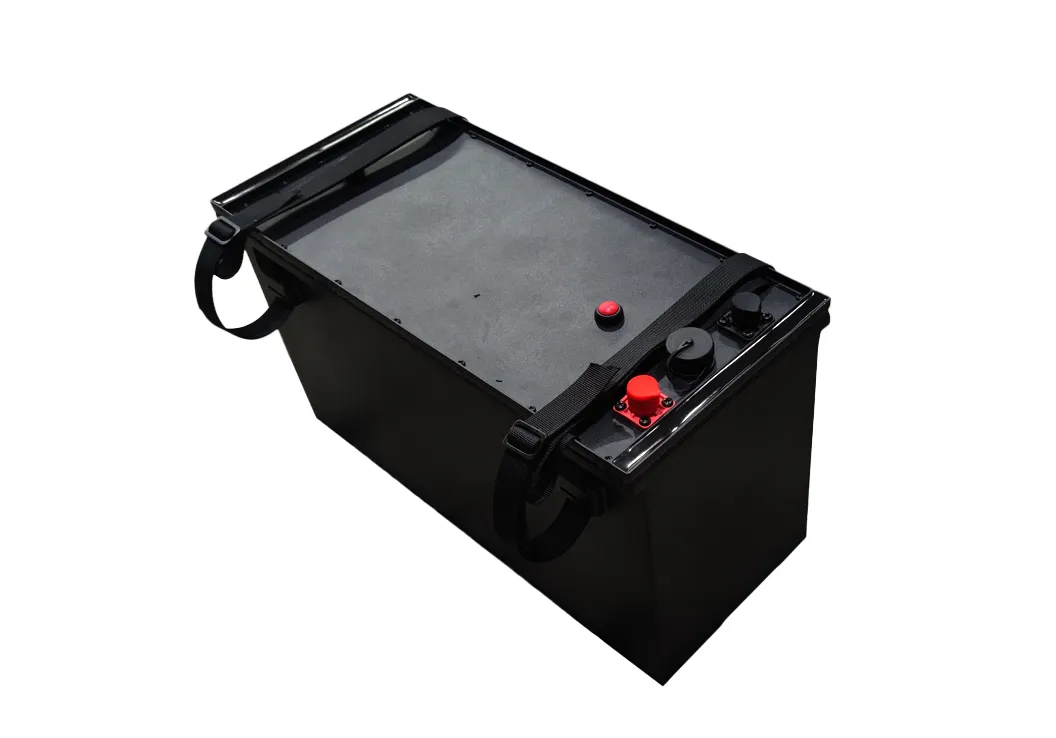
48V 105Ah 16S7P Waterproof Sodium-Ion Battery Pack Design
Product Highlights
- Cell configuration: 16S7P (112× cylindrical 40160 sodium-ion cells, 3.0V/15Ah each)
- Nominal voltage / capacity: 48V / 105Ah @0.2C
- Max. continuous discharge: 50A across -40°C~+45°C
- Peak / burst current: 200±20A — ≤30ms window
- Charge heating: Integrated low-temp heating, active -20°C~+10°C, no external heater required
- Communication: RS485, waterproof connector, BMS rated -40°C~+65°C
- Cycle life: ≥2600 cycles @ ≥70% capacity retention
- Weight: Approx. 57kg

| No. | Item | Specification | Note |
|---|---|---|---|
| 1 | Nominal Voltage | 48V | 3.0V/Cell |
| 2 | Nominal Capacity | 105Ah | @0.2C |
| 3 | Minimum Capacity | 101Ah | / |
| 4 | Initial Internal Impedance | ≤70mΩ | AC 1KHZ |
| 5 | Standard Charge Voltage | 63.2V | 3.95V/Cell |
| 6 | Standard Charge Current | 21A | @0.2C |
| 7 | Max Charge Current | 21A | 10°C~45°C |
| 50A | -20°C~+10°C | ||
| 8 | Standard Discharge Current | 21A | @0.2C |
| 9 | Max. Discharge Current | 50A | -40°C~+45°C |
| 10 | Burst Discharge Current | 200±20A | ≤30ms |
| 11 | Discharge Cut-off Voltage | 25.6V | 1.6V/Cell |
| 12 | Cycle Life | ≥2600 cycles | Retention: ≥70% |
| 13 | Charge Temperature | -20°C~+45°C | Standard Charge |
| 14 | Discharge Temperature | -40°C~+45°C | Standard Discharge |
| 15 | Storage Temperature | -20°C~ +35°C | ≤3 Months |
| -10°C~ +25°C | ≤1 Year | ||
| 16 | Weight | About 67 | kg |
| 17 | Special Request | 1. Low-Temperature Charging Heating System 2. RS485 Communication Interface 3. IP67 Waterproof Protection | / |


Engineering Questions — 48V 105Ah Sodium-Ion Battery Pack
Can a sodium-ion battery pack really discharge at -40°C?
CMB1607 is validated under GB 31241-2022 test protocol to discharge at -40±2°C at 0.2C after being held at that temperature for 16-24 hours, retaining at least 70% of nominal capacity with no deformation, leakage, or thermal event. This is an internal engineering qualification result; independent third-party lab verification is in progress and will be published when available.
Why choose sodium-ion over LiFePO₄ for cold-climate field equipment?
Sodium-ion cells maintain more stable ionic conductivity at sub-zero temperatures than LiFePO₄, reducing reliance on active heating to sustain usable capacity. Combined with sodium’s supply chain independence from lithium and cobalt, this typically lowers total cost of ownership for large fleets of outdoor-deployed equipment, though upfront cell cost may vary by order volume.
What does the RS485 communication interface on this battery pack support?
The BMS (model D1017LF16S100A) exposes pack-level voltage, current, temperature, state of charge, and protection status over RS485 using a Modbus RTU-style register map, allowing integration with a customer’s existing SCADA, fleet management, or remote monitoring system. A waterproof connector is used for outdoor deployment.
Does this battery pack need external heating equipment to charge in winter?
No external heater is required. The pack integrates a low-temperature charge heating function and an internal thermal insulation layer, allowing standard charging across -20°C to +45°C without auxiliary heating hardware on site.
Tailored Customization
Our design team can create custom battery designs for just about any device or machine.
Timely Delivery
Our efficient production and distribution process gets your product delivered in a timely manner.
Quality Guarantee
We stand by our products and guarantee you’ll be happy with your purchase.