

Key Takeaways
- AAA is a size standard, not a chemistry — alkaline, NiMH, lithium (Li-FeS₂), and zinc-carbon all come in the AAA form factor, each with very different performance.
- No single chemistry is “best” — each one suits a different combination of drain rate, temperature, and replacement frequency.
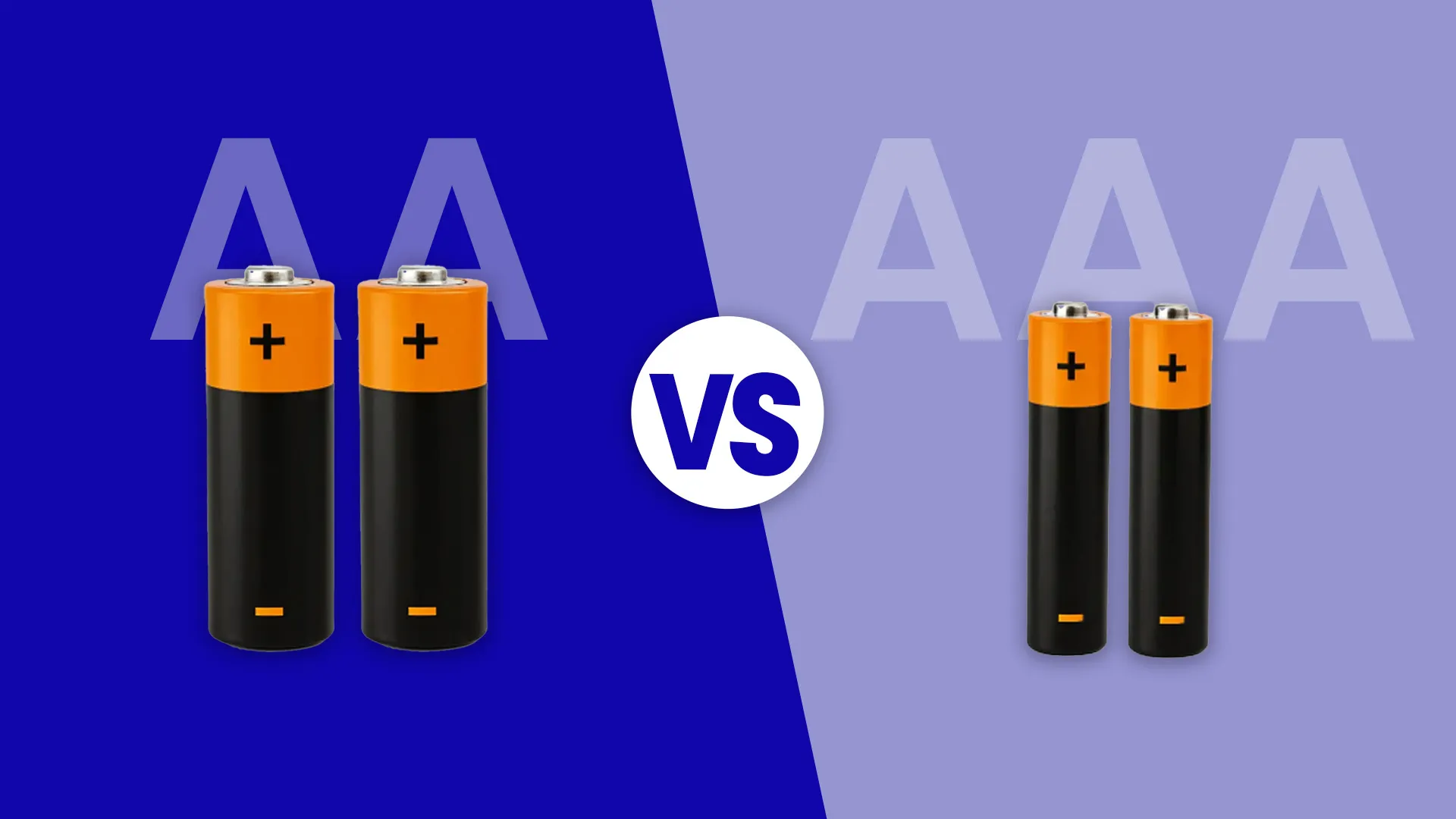
- AAA is not a smaller version of AA with the same specs — it’s a separate size with roughly 40–50% of an AA’s capacity, built for compact, lower-drain devices.
- For sustained high-drain or industrial use beyond AAA’s ceiling, a custom lithium-ion battery pack — not a larger consumer cell — is the appropriate upgrade path.
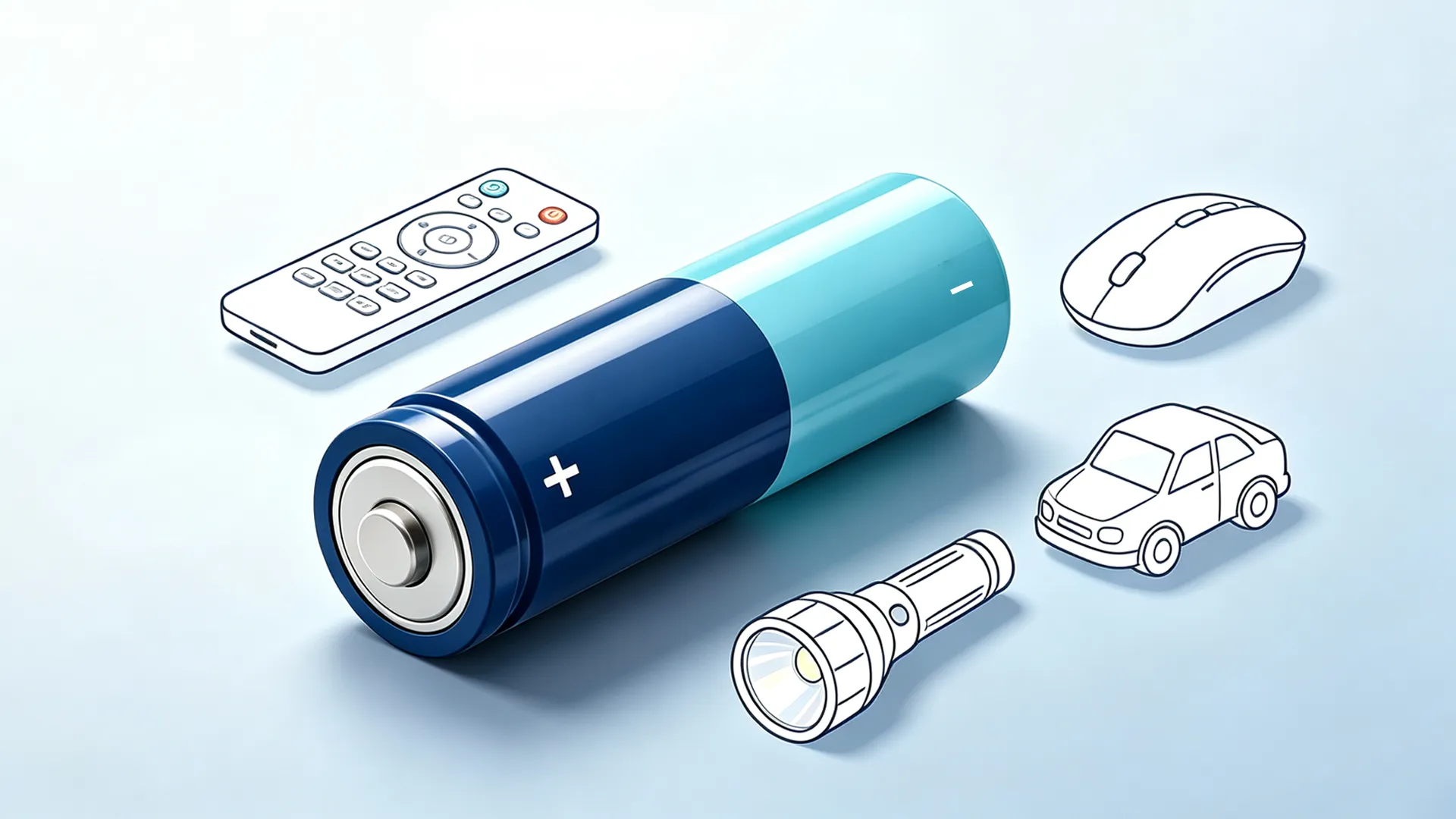
An AAA battery is a standardized cylindrical cell measuring 10.5 mm × 44.5 mm under IEC 60086-1 (alkaline designation: LR03) and ANSI C18.1.Like AA, “AAA” describes size only, and the chemistry inside determines everything about how it actually performs.
Alkaline AAA cells deliver 1.5V and roughly 800–1,200 mAh — the standard economy choice for most compact electronics. NiMH rechargeables deliver 1.2V, roughly 600–1,000 mAh, and 500–1,000+ recharge cycles — the better economics for frequently used devices. Lithium iron disulfide (Li-FeS₂) primaries deliver 1.5V with up to ~1,300–1,500 mAh and far superior cold-weather performance, at a higher cost. Zinc-carbon is the lowest-cost, lowest-performance option, suited only to very light loads.
Choosing the right AAA chemistry depends on how often you replace batteries, whether the device faces temperature extremes, and how much current it actually draws.
What Is an AAA Battery?
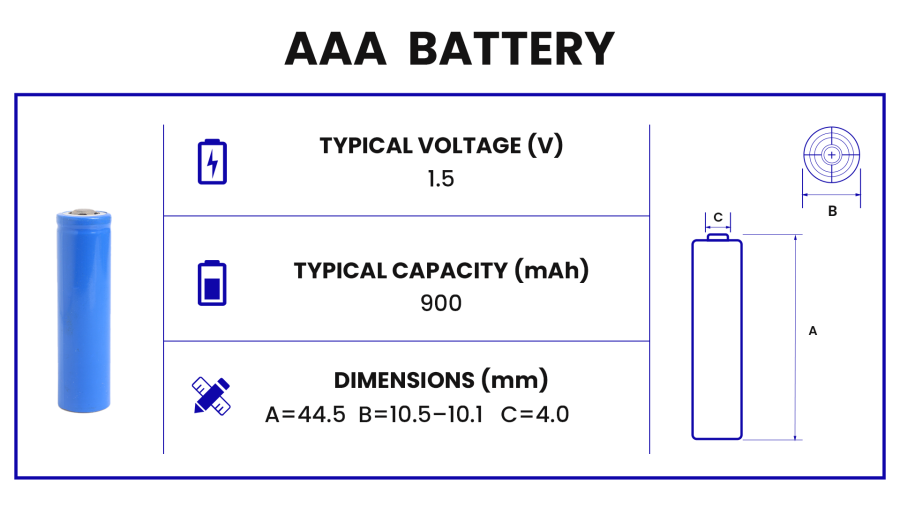
AAA is an internationally standardized cylindrical battery size — not a chemistry. Despite variations in national standards and brand labeling practices, manufacturers worldwide consistently recognize this battery size as “AAA.”
Standard dimensions:
| Specification | Value |
| Diameter | 10.5 mm |
| Length | 44.5 mm |
| IEC designation (alkaline) | LR03 |
| Governing standards | IEC 60086-1 / IEC 60086-2, ANSI C18.1 |
First, AAA batteries follow precise and standardized dimensions to ensure compatibility with devices worldwide. As a result, a AAA battery from any certified manufacturer will physically fit any AAA-rated device, regardless of brand. However, compatibility does not always mean identical performance. The main differences come from the battery chemistry inside, which directly affects capacity, runtime, voltage stability, and overall performance. The following sections explore each chemistry type in detail.
Chemistry Overview: Four Options in One Size
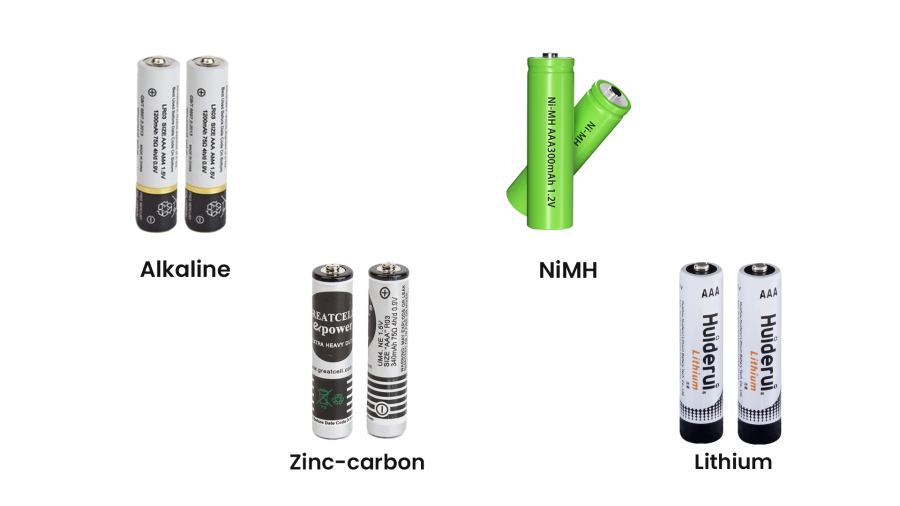
Four chemistries account for nearly all AAA batteries on the market:
| Chemistry | Nominal Voltage | Typical Capacity | Rechargeable | Shelf Life | Best For |
| Alkaline | 1.5V | 800–1,200 mAh | No | Up to 5–7 years | General-purpose, compact devices |
| NiMH | 1.2V | 600–1,000 mAh | Yes (500–1,000+ cycles) | 3–5 years (retained charge) | Frequently replaced devices |
| Lithium (Li-FeS₂) | 1.5V | ~1,000–1,300 mAh | No | 10–15 years | Cold weather, occasional high-drain bursts |
| Zinc-carbon | 1.5V | 300–600 mAh | No | 2–3 years | Very light, infrequent loads |
Now let’s look at each one in detail.
Alkaline AAA Batteries
Alkaline is the default AAA chemistry sold everywhere, and for most compact, low-to-moderate-drain devices, it’s genuinely the right choice.
How it works:
Alkaline cells use a zinc anode, a manganese dioxide cathode, and a potassium hydroxide electrolyte — the same basic chemistry as alkaline AA cells, just scaled down to AAA’s smaller volume. The smaller amount of active material is precisely why AAA capacity tops out well below AA’s, even within the same chemistry.
Performance profile:
| Parameter | Typical Value |
| Nominal voltage | 1.5V |
| Capacity | 800–1,200 mAh (up to ~1,300–1,500 mAh in premium cells) |
| Shelf life | Up to 5–7 years |
| Rechargeable | No |
| Cost | Lowest upfront cost of any 1.5V AAA chemistry |
Strengths: widely available, long shelf life, no charging equipment required, works reliably in the vast majority of remotes, clocks, and everyday compact electronics.
Limitations:voltage sags under continuous high-current draw, performance drops in cold temperatures, and single-use means recurring cost and waste for frequently-cycled devices.
Best suited for: TV/AC remotes, wall clocks, digital thermometers, and any compact device used at room temperature that doesn’t draw much current.
NiMH Rechargeable AAA Batteries
For AAA devices that go through batteries often, NiMH is where the math tips in favor of rechargeables.
How it works:
AAA NiMH cells use the same metal hydride/nickel hydroxide electrochemistry as AA NiMH cells, just scaled to AAA’s smaller volume — hydrogen ions move reversibly between electrodes during charge and discharge, which is what allows the cell to be recharged hundreds of times. For the full reaction equations and voltage derivation, see the NiMH chemistry breakdown in our AA battery guide — the underlying science is identical; only the cell’s physical volume (and therefore capacity) changes.
Performance profile:
| Parameter | Typical Value |
| Nominal voltage | 1.2V |
| Capacity | 600–1,000 mAh |
| Charging voltage | 1.5V |
| Cycle life | 500–1,000+ charge cycles |
| Shelf life (charge retention) | 3–5 years |
Charging AAA NiMH cells follows the same principles as AA NiMH — use a charger built specifically for NiMH chemistry, avoid overcharging with a smart charger, and charge at 50°F–86°F (10°C–30°C).
Strengths: substantially lower long-term cost and waste for frequently used devices, stable voltage across most of the discharge curve.
Limitations: 1.2V is slightly lower than alkaline’s 1.5V, higher upfront cost per cell, requires a compatible charger.
Best suited for: wireless mice and keyboards, fitness trackers, and any compact device where batteries are swapped two or more times a year.
Lithium (Li-FeS₂) AAA Batteries
The premium, single-use option — built for the two conditions where alkaline AAA cells struggle most: cold temperatures and occasional bursts of higher current.
How it works:
A lithium metal anode and iron disulfide cathode with a non-aqueous electrolyte give this chemistry a flatter discharge voltage curve and much better cold-weather behavior than alkaline, since the electrolyte doesn’t thicken and slow down the way water-based alkaline chemistry does.
Performance profile:
| Parameter | Typical Value |
| Nominal voltage | 1.5V |
| Capacity | ~1,000–1,300 mAh |
| Shelf life | 10–15 years |
| Cold-weather performance | Retains most capacity in extreme cold where alkaline drops sharply |
Strengths: best cold-weather performance of any AAA chemistry, good for occasional high-drain bursts, very long shelf life.
Limitations: noticeably higher cost per cell, and single-use means it’s not the economical choice for high-frequency-replacement devices.
Best suited for: compact flashlights or remotes used outdoors or in unheated spaces, and devices stored for years before use.
Zinc-Carbon AAA Batteries
The oldest, most basic AAA chemistry still sold — a budget option for the lightest possible loads only.
How it works
A zinc anode and manganese dioxide cathode with an acidic ammonium chloride or zinc chloride electrolyte, rather than alkaline’s basic electrolyte. This produces lower capacity and a voltage that sags more sharply under load.
Performance profile:
| Parameter | Typical Value |
| Nominal voltage | 1.5V |
| Capacity | 300–600 mAh |
| Shelf life | 2–3 years |
| Cost | Lowest of any AAA chemistry |
Strengths: lowest purchase price, fine for extremely light, infrequent loads.
Limitations: capacity is roughly a third to half of alkaline’s, shorter shelf life, poor performance beyond very low-drain use.
Best suited for: novelty items, promotional products, and devices where the battery is essentially disposable packaging.
AAA vs. Other Small Cell Formats (18650, 14500)
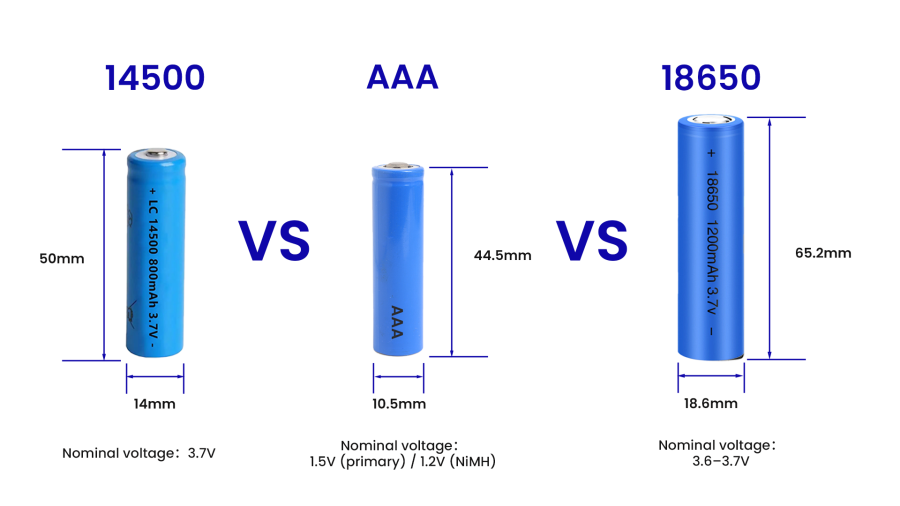
Readers researching AAA batteries for DIY electronics or battery pack projects often ask how AAA compares to larger rechargeable formats used in more demanding applications:
| Format | Diameter | Length | Nominal Voltage | Typical Use |
| AAA | 10.5 mm | 44.5 mm | 1.5V (primary) / 1.2V (NiMH) | Consumer electronics, low-drain devices |
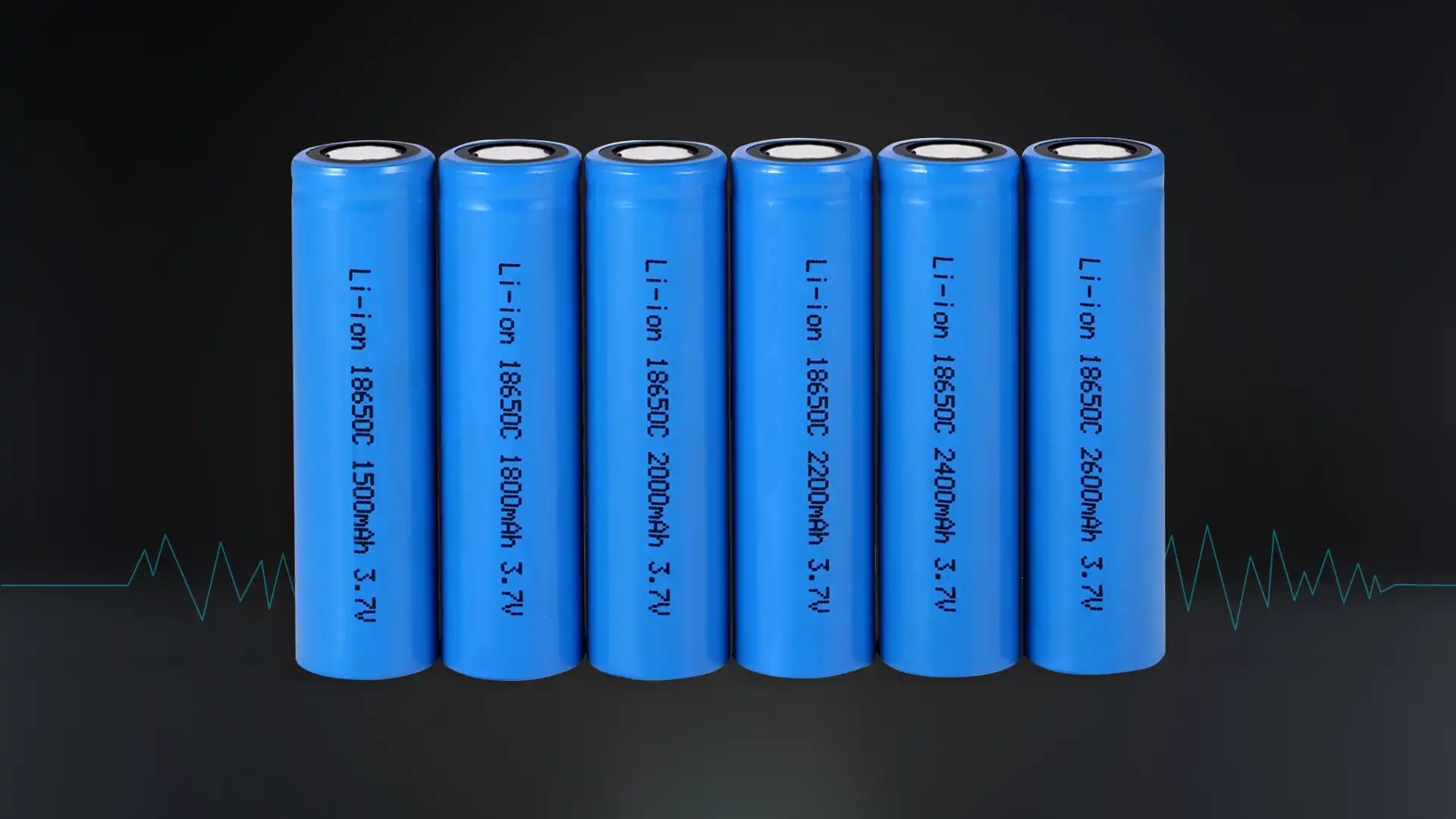
| 14500 (AA-sized Li-ion) | 14.0 mm | 50.0 mm | 3.7V | Specialty flashlights, DIY electronics rated for 3.7V |
| 18650 | 18.6 mm | 65.2 mm | 3.6–3.7V | Power tools, e-bikes, laptop batteries, custom industrial packs |
Some devices are engineered to accept either three AAA cells in series (4.5V total) or a single 18650 cell (3.6–3.7V), because the two configurations land in a similar practical voltage range.
They are not freely interchangeable, though, without a device specifically designed to accept both — mixing formats without manufacturer support risks damaging the device. For readers comparing this against the AA-sized 14500 cell in detail, see the full chemistry breakdown in our 14500 Battery VS AA Battery guide.
Which AAA Battery Should You Choose?
- If your device draws very little current and is used occasionally (a basic wall clock, spare remote) → standard alkaline or even zinc-carbon is sufficient and most economical.
- If you replace batteries in the same device two or more times per year (wireless mouse, keyboard, fitness tracker) → NiMH rechargeables typically pay for themselves within 6–12 months.
- If your device is used outdoors in cold conditions or needs occasional bursts of higher current (compact flashlight, remote used in an unheated space) → lithium iron disulfide (Li-FeS₂) delivers meaningfully better performance than alkaline in both scenarios.
- If your budget is the primary constraint and the device barely draws power (novelty item, giveaway gadget) → zinc-carbon does the job at the lowest cost.
- If your product needs more power than any AAA chemistry can reasonably deliver → the answer isn’t a “better” AAA battery — it’s stepping up to AA, or for professional/industrial equipment, a custom lithium-ion battery pack engineered for the application’s actual current and voltage requirements.
Cost & Sustainability: AAA Alkaline vs. NiMH
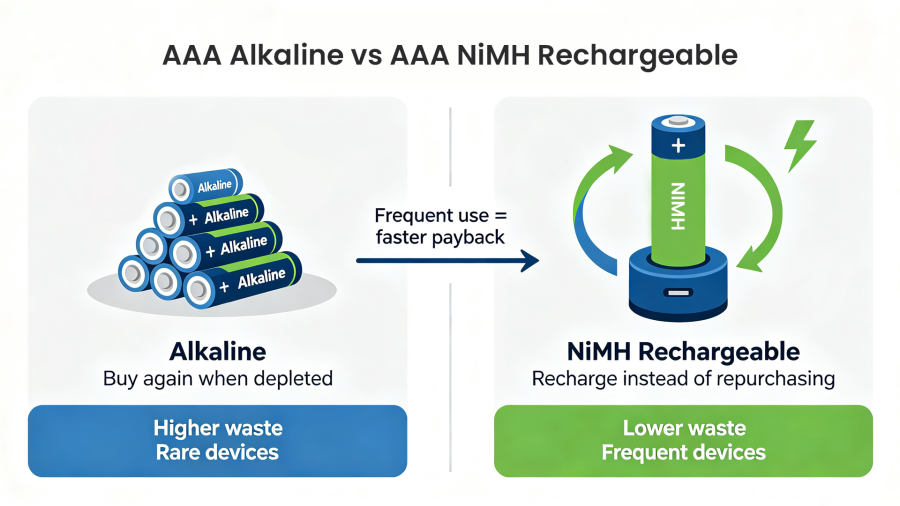
| Category | Alkaline (typical annual use) | NiMH Rechargeable (typical annual use) |
| Replacement frequency | Ongoing repurchase as cells deplete | Recharge in place, no repurchase needed |
| Waste generated | Higher — each depleted cell becomes disposal waste | Substantially lower — one set of cells can replace dozens of disposables over its service life |
| Best economic case | Devices used rarely (spare remote, emergency flashlight) | Devices in frequent daily use (mouse, keyboard, thermometer) |
As a rule of thumb: the more frequently a device cycles through batteries, the faster NiMH’s higher upfront cost is offset by eliminated repurchases — the same cost logic that applies to AA batteries, just at AAA’s smaller capacity scale.
Why AAA — Not AA — Powers These Devices
AAA isn’t just “a smaller AA” chosen at random; its size and weight make it the correct engineering choice for specific device categories:
- TV/AC remote controls, wall clocks, digital thermometers: these draw so little current that AA’s extra capacity would go unused for years — AAA’s smaller footprint reduces the device’s overall size and material cost without sacrificing usable runtime.
- Wireless mice, keyboards, and fitness trackers: device weight directly affects user comfort and battery life claims on the box; AAA’s lighter mass matters more here than raw mAh.
- Hearing aids and select medical devices: these use specialized AAA-based formats where every millimeter of housing size matters for discretion and comfort — AA would simply be too large to fit the form factor at all.
- Small flashlights, motion sensors, wireless security cameras: compact housings are the entire product design point; AAA is what makes the miniaturization possible in the first place.
The common thread: whenever a product’s size or weight is part of its value proposition, AAA is usually the deliberate engineering choice — not a downgrade from AA.
Safety & Storage: What’s Different for AAA?
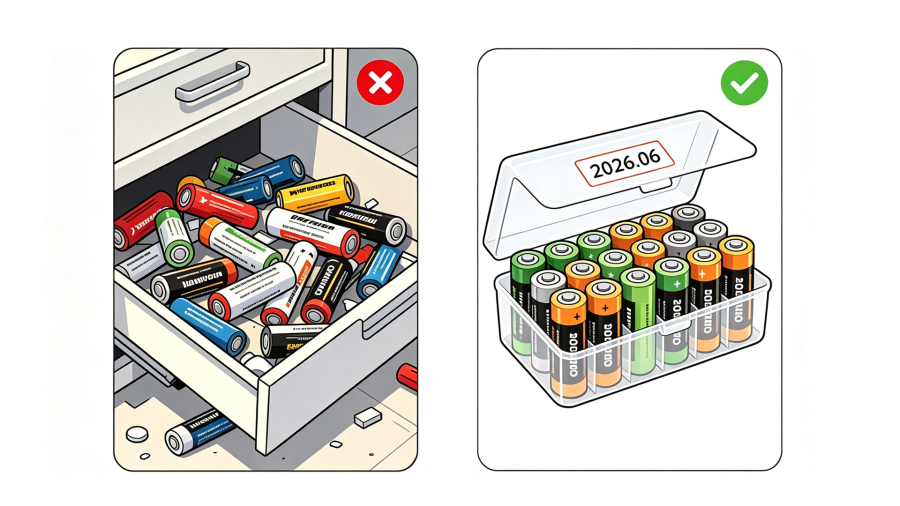
Most safety practices — don’t mix chemistries, don’t puncture or incinerate cells, dispose through proper recycling channels — apply identically across AA and AAA; What’s specifically worth flagging for AAA:
- Leakage risk is somewhat higher than AA. AAA’s thinner casing and smaller internal volume make it more prone to leakage if left in a device after full discharge or stored for long periods in heat — check devices that sit unused (spare remotes, backup flashlights) every few months.
- Don’t force-fit. AAA’s small size makes it tempting to wedge into a compartment built for a different size with tape or padding — don’t. A physical mismatch can damage both the battery and the device’s contacts.
- Wearables and hearing aids need extra care. Devices worn against skin or inserted in the ear compound the consequences of a leak — replace AAA cells in these devices proactively rather than waiting for a low-battery signal.
FAQ
What does “AAA” stand for in battery sizes?
It doesn’t stand for words — like AA, “AAA” is a standardized size designation under ANSI/IEC that defines physical dimensions, not a specific brand or performance tier.
Why do some devices use AAA instead of AA if AA has more capacity?
Because capacity isn’t the only design constraint — size, weight, and compartment space matter just as much. A hearing aid or a lightweight wireless mouse is engineered around AAA specifically so the device itself can stay small and light; swapping in AA batteries isn’t simply “more power,” it would mean redesigning the entire product to fit a larger cell.
Are AAA batteries interchangeable with 18650 cells?
No, not directly. Some devices are engineered to accept either three AAA cells in series or a single 18650, but this requires the device to be specifically designed for both configurations.
Which AAA battery chemistry is best for hearing aids or wearables?
Standard alkaline is fine for most hearing aids and wearables used at room temperature. If the device is worn outdoors in cold weather, lithium (Li-FeS₂) holds its voltage better; for daily wearables that need frequent battery swaps, NiMH rechargeables usually work out cheaper over time — check that the specific device tolerates 1.2V, though, since some hearing aid circuits are calibrated for 1.4–1.45V zinc-air cells instead of standard AAA chemistries.
Are AAA batteries more prone to leaking than AA?
Slightly, yes — their thinner casing and smaller internal volume make them somewhat more susceptible to leakage after full discharge or extended storage in heat. This matters more for AAA than AA specifically because AAA is so often used in wearables and hearing aids, where a leak has closer contact with skin.
How long do NiMH AAA batteries last before needing replacement?
Quality NiMH AAA cells typically deliver 500–1,000+ charge cycles before capacity noticeably declines — comparable cycle life to AA NiMH, just at a lower per-charge capacity.
Is lithium iron disulfide worth the extra cost for AAA batteries?
It’s worth it specifically for cold-weather use or devices that need occasional high-current bursts. For typical room-temperature, low-drain devices, standard alkaline performs just as well for less money.






One thought