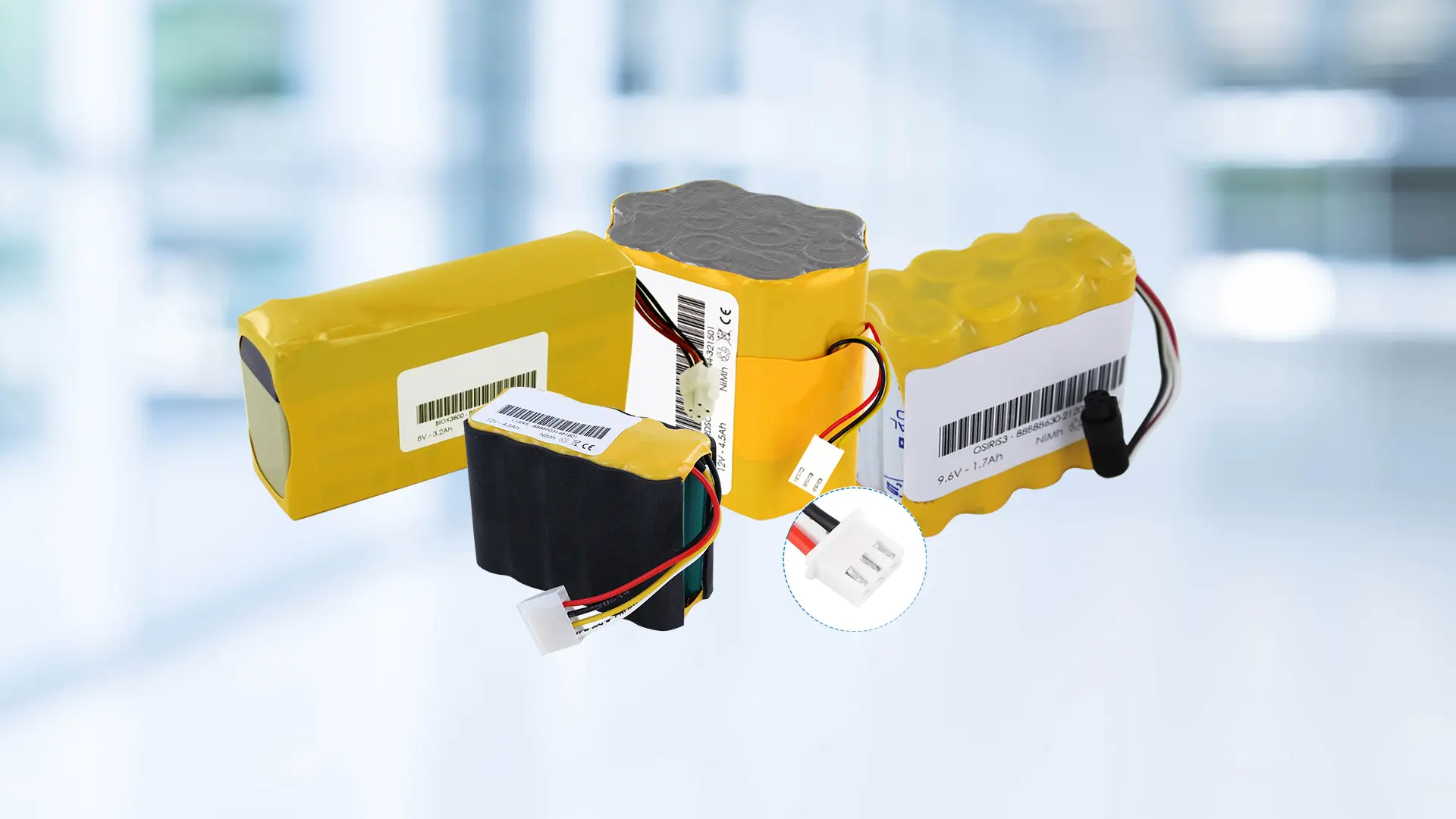
UN3480 is for those shipped independently; UN3481, on the other hand, represents all lithium-ion batteries shipped while packed with equipment, or intrinsically part of the equipment. The shipping number itself does not have anything to do with how safe the battery or shipments of the battery are historically. As of 1 January 2026, virtually all air shipments of batteries while packed with equipment must also carry at no greater than 30% state of charge.
By purchasing custom battery packs, both of your numbers will be met. A bulk shipment sent to your manufacturing facility will arrive with the UN 3480 classification. The SAME battery pack once it has been incorporated into the device for which it was designed will carry the UN 3481 classification. If you do not get this right, you run the risk of having your items returned, incorrect labeling and fines. In most of the available guidelines, only a few basic definitions of the various classifications have been provided.
This guide will review Li-ion batteries (including lithium polymer and LiFePO4) but not single-use lithium metal batteries (UN3090/UN3091) as well as sodium-ion batteries (they too have a separate number).
UN3480 vs UN3481: Understanding the Numbers and Classifying Your Shipments
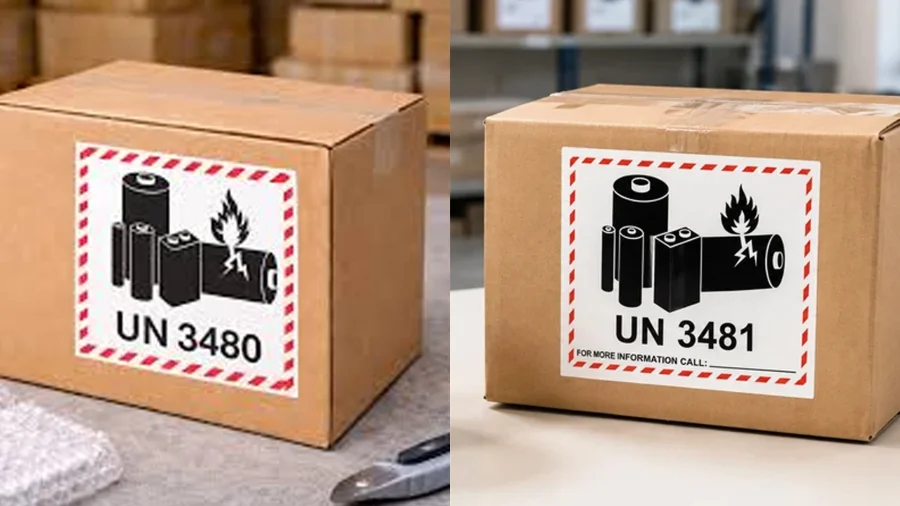
The UN number is determined by how the lithium ion battery is transported, and not by its size. When the battery is transported independently of its device, then the UN number 3480 applies. When the battery is either shipped together with its device or is already installed in the device, the UN number 3481 applies. Watt-hours are used to determine which packing Instructions.
The Three Shipping States
| How the battery ships | UN number | IATA packing instruction | Example |
| Alone | UN3480 | PI 965 | Custom battery packs sent to an equipment manufacturer |
| In the same package as the device it powers, not installed | UN3481, packed with equipment | PI 966 | A handheld instrument shipped with a spare pack |
| Installed in the device | UN3481, contained in equipment | PI 967 | An industrial sensor shipped with its battery fitted |
A simple memory aid: alone ends in 0 (UN3480). With or within equipment ends in 1 (UN3481). UN3481 does not mean the battery is safer. It just describes how the battery ships.
A Four-Step Check Before You Book Freight
1.Confirm the chemistry. Lithium-ion, including lithium-polymer and LiFePO4, uses UN3480 and UN3481. Single-use lithium metal batteries use different numbers.
2.Ask what the battery powers. The U.S. Pipeline and Hazardous Materials Safety Administration(PHMSA) defines “equipment” as the device the battery supplies with power to operate. In one interpretation, PHMSA classed a portable charger for an implanted medical device as UN3480, because its battery powers a different device.
3.Look at how the battery sits relative to that equipment. Alone, packed with it, or installed in it (see the table above).
4.Only then use watt-hours. Wh does not change the UN number. It decides which section of the packing rules and which exceptions apply (next section).
Four Quick Examples
- Custom battery packs shipped to your assembly plant: UN3480.
- A device with its battery installed, sent to a customer: UN3481,contained in equipment.
- A spare battery pack and the device it powers in one carton: UN3481,packed with equipment.
- A portable power unit whose main job is to charge other devices: UN3480.PHMSA treats power banks as batteries, because the cell inside powers other equipment.
Edge Cases That Trip Shippers Up
- Devices with a power-bank feature. PHMSA looks at the device’s primary purpose. If it mainly exists to supply power to another device, it is UN3480. If it has another main job, it is UN3481.
- A component with a backup battery pack. PHMSA classed a power converter with a backup battery as UN3480 while it shipped to a server assembler. Once installed in the server, the finished server is UN3481. The same battery pack can change number as it moves down the supply chain.
- A battery pack and a battery pack charger in one carton. We found no PHMSA ruling that settles this, and a charger is not equipment the battery powers. Do not assume UN3481 applies. Ask your carrier or a dangerous-goods specialist before the first shipment. At CMB, our standard practice is to ship and declare battery packs and their chargers separately.
Watt-Hour Ratings: Which Shipping Rules Apply to Your Battery Pack
Watt-hours (Wh) tell you which rules apply, not which UN number you use. Multiply nominal voltage by capacity in amp-hours. For lithium-ion, the common small-battery thresholds are 20 Wh per cell and 100 Wh per battery. For US road or rail only, a higher limit of 60 Wh per cell and 300 Wh per battery applies if the outer package carries a special mark.
How to Calculate Wh (With Real CMB Battery Packs)
The formula is Wh = V × Ah.
A 21.6 V battery pack rated 5.6 Ah holds 21.6 × 5.6 = 120.96 Wh.
The table below uses five CMB pack models whose UN38.3 certificates are listed on our battery certification page. Wh values are calculated from the nominal voltage and capacity shown there.
| Model | Nominal voltage and capacity | Wh | What it means for shipping |
| CMB03020097 | 11.1 V, 5.8 Ah | 64.38 | Below 100 Wh. May use the small-battery exceptions if every condition is met. |
| CMB07040052 | 25.55 V, 10.4 Ah | 265.72 | Above 100 Wh. Fully regulated for air and sea. The higher US road and rail limit of 300 Wh may apply with the special mark; check cell-level limits too. |
| CMB03070025 | 10.905 V, 24.5 Ah | 267.17 | Same as the row above. |
| CMB10040040 | 36.5 V, 10.4 Ah | 379.6 | Above 300 Wh. Fully regulated in every mode. |
Two details are matter. First, the 100 Wh batteries limit applies to the assembled battery. In February 2026, PHMSA confirmed that a battery built from two 40.7 Wh cells (81.4 Wh in total) can still use the small-battery exceptions, even though each cell is above 20 Wh. Second, the exceptions are conditional. They are subject to specific requirements regarding labeling, packaging, and acceptance by the carrier.
Why Small Size Does Not Mean Unregulated
A small size battery is still a regulated hazardous material when it ships. In 2025, PHMSA conducted an inspection of a U.S. distributor and discovered that the company was shipping disposable e-cigarettes containing lithium-ion polymer batteries with a rated energy of approximately 2.66 watt-hours (Wh). The shipments were described as UN3481, but the packages carried no lithium battery mark. PHMSA issued a notice of probable violation. The lesson for pack buyers: “under 100 Wh” is not “ordinary cargo”.
Design Choices Affecting Transport Regulations
- Check energy at the design stage, not at the dock. A battery pack just under 100 Wh follows lighter rules than one just above it. Decide early whether a slightly smaller pack still meets your runtime.
- Put the Wh rating on the battery. Since May 10, 2024, each lithium-ion battery must be marked with its Wh rating. For assemblies built from several modules, PHMSA has said the marked Wh rating must represent the completed battery assembly, not just one module. This matters for modular lithium battery packs, where modules are combined into a larger pack.
Shipping Rules by Route: China Export, US Import, and US Domestic Delivery

A battery pack that leaves a factory in China and reaches a US plant can fall under three rule sets: IATA or IMDG for the international leg, and 49 CFR for the US leg. The party that offers the shipment to a carrier is responsible for it, so responsibility changes hands along the route.
Route Map: Who Follows Which Rules
| Leg | Mode | Main rules | What to check |
| China to US | Air | IATA Dangerous Goods Regulations, 67th edition (in force since January 1, 2026), aligned with ICAO Technical Instructions | Packing instruction (965, 966 or 967), state of charge, cargo-aircraft-only status for UN3480 |
| China to US | Sea | IMDG Code Amendment 42-24 (mandatory since January 1, 2026) | The safety data sheet and transport documents should cite the current amendment. A carrier advisory warns that safety data sheets still citing the old amendment can be rejected |
| Inside the US | Road | 49 CFR 173.185 | Marks, and shipping papers for fully regulated shipments. Class 9 placards are not required for domestic transport |
| Inside the US | USPS Publication 52 | Loose lithium-ion batteries go by surface only. Batteries in or packed with equipment can go by air or surface, with the correct UN number on the mark |
In practice, an importer that receives UN3480 packs and re-ships them inside the US becomes the shipper for that leg. It then owns the marks, the papers, and the training duties for that shipment.
The 2026 State-of-Charge Rules
State of charge (SoC) is how full the battery is, as a share of its rated capacity. Air rules cap it at 30% for most lithium-ion shipments. IATA’s 2026 battery guidance sets out the current position.
| Shipment | Packing instruction | SoC rule in 2026 |
| UN3480, batteries alone | PI 965 | 30% or less. Cargo aircraft only |
| UN3481, packed with equipment | PI 966, Section I | 30% or less, mandatory since January 1, 2026 |
| UN3481, packed with equipment | PI 966, Section II, above 2.7 Wh | 30% or less, mandatory since January 1, 2026 |
| UN3481, packed with equipment | PI 966, Section II, 2.7 Wh or less | 30% or less recommended |
| UN3481, contained in equipment | PI 967 | 30% or less recommended, not mandatory |
For packed-with-equipment shipments, IATA also accepts an indicated battery capacity of 25% or less. To ship above 30%, the shipper needs written approval from the authorities of the country of origin and of the carrier’s country, and the batteries can only fly on cargo aircraft.
How to Verify 30% State of Charge
The 30% limit is a share of rated capacity, so a voltage reading alone does not prove it. Factories use three checks, and they can disagree more than people expect.
- Capacity counting. Start from a known full charge and remove a measured amount of capacity. This is the most direct method.
- Open-circuit voltage after rest. Fast and simple, but less reliable on chemistries with a flat voltage curve, such as LiFePO4, and sensitive to temperature.
- BMS-reported state of charge. Convenient, but it is an estimate and can drift. A well-designed battery management system reports it, yet an estimate is not a measurement.
Ask your supplier three questions: which method they use at shipment, how accurate the instrument is, and whether they keep a record for each batch. Then ask what happens in storage. Battery packs lose a little charge over time, so a pack set to 30% weeks earlier is no longer at exactly 30%.
Packaging, Marking, and Labels: What Goes on the Box
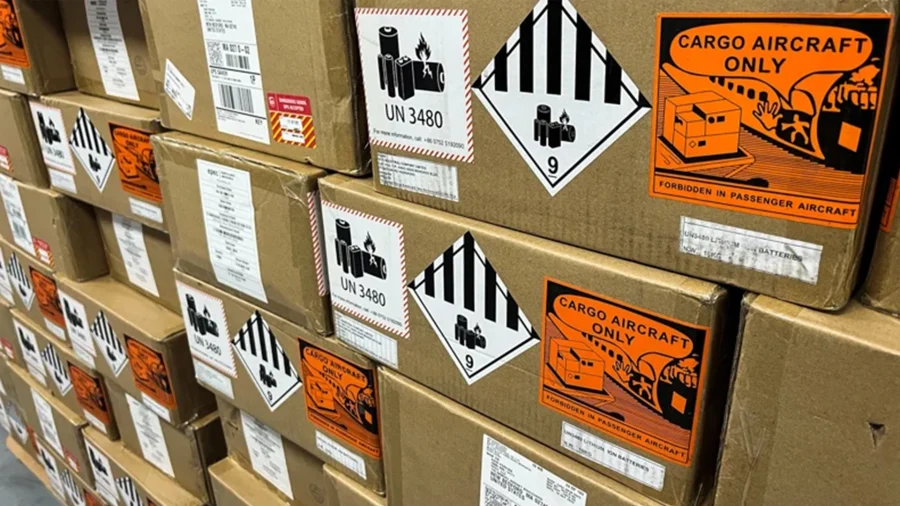
Which marks you need depends on whether the shipment is “excepted” (small) or fully regulated. Excepted packages carry the lithium battery mark. Fully regulated packages carry a Class 9 lithium battery label, a shipping name and UN number, and shipping papers. Packages that may not fly on passenger aircraft also carry a Cargo Aircraft Only label.
Marks and Labels by Shipment Type
| Item | Applies to | Notes |
| Lithium battery mark showing the UN number (UN3480 or UN3481) | Packages using the small-battery exceptions | Place it on one side of the package, flat and unfolded |
| Class 9 lithium battery label | Fully regulated shipments | Use the label with the battery symbol, not the generic Class 9 diamond |
| Proper shipping name and UN number, plus shipping papers | Fully regulated shipments | For example: UN3481, Lithium ion batteries contained in equipment, 9 |
| Cargo Aircraft Only label | Packages not allowed on passenger aircraft, such as UN3480 | Air shipments |
| “LITHIUM BATTERIES—FORBIDDEN FOR TRANSPORT ABOARD AIRCRAFT AND VESSEL” | US road or rail shipments using the 60 Wh and 300 Wh limits | Exact wording is required |
| Wh rating | Every lithium-ion battery | Required since May 10, 2024 |
Date of Phone Number Requirement for Lithium Batteries
The contact telephone number was previously required by the lithium battery marking specification. The PHMSA’s HM-215Q rule eliminated that requirement. Any telephone number remains optional through December 31, 2026, when the transitional time period ends, according to a letter sent to PHMSA on behalf of the industry. The same letter requests further guidance whether the “Call for additional information” wording present on existing marks will remain optional after the expiration of the transitional period. We have not yet received a response from PHMSA.
If you print marks in bulk, order versions without the phone line now. Guides that say the mark must show a phone number are out of date.
Overpacks and Repackaging
When you re-pack cartons into an overpack (a bigger outer package), overpacks also require the Marks unless the marks within are viewable from the outside. PHMSA singled out this same situation in the vape-pen incident; the inner containers were marked but the overpacked shrink-wrapped pallet was not. In addition to getting no separate penalty, they didn’t treat the overpack as a way to check for quality during their inspection.
Packaging Basics
Package your materials to avoid short circuits as well as to prevent them from moving around. Protect or cover the terminals and make certain that the batteries do not come into contact with each other or with any metal material. You should use cushioning material when packing batteries, too, in addition to a durable outside package. CMB ships its hazardous goods under the Class 9 hazardous goods category, therefore, CMB utilizes packaging that has been approved by the UN.
Documents and UN38.3: What Your Battery Supplier Must Provide
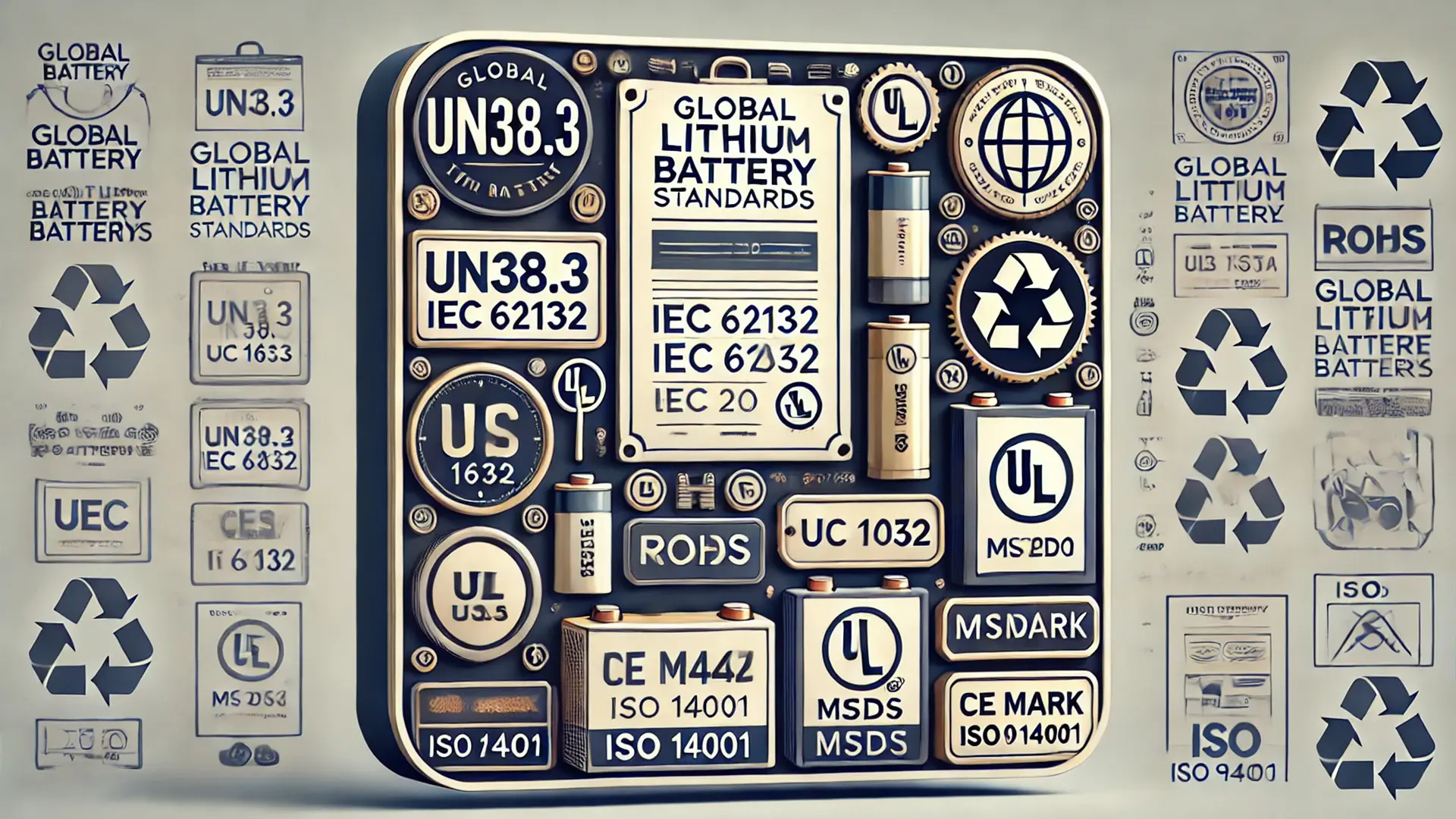
There are eight UN38.3 tests that must be performed on li cells or batteries before shipping them out. Any li cells or batteries you purchase will need to have a test summary provided by the manufacturer/seller. This summary needs to contain eight specific pieces of information so you can verify it quickly.
The Eight UN38.3 Tests in Plain English
| Test | What it simulates |
| T1 Altitude simulation | Low air pressure in an aircraft hold |
| T2 Thermal test | Repeated hot and cold swings |
| T3 Vibration | Shaking in trucks, ships, and aircraft |
| T4 Shock | Sudden jolts |
| T5 External short circuit | A direct short across the terminals |
| T6 Impact or crush | A heavy blow or crushing force |
| T7 Overcharge | Charging past the safe limit |
| T8 Forced discharge | Draining a cell past its safe limit |
PHMSA’s test summary guide lists the same eight tests.
Reading a Test Summary: A Nine-Point Check
PHMSA’s 2026 interpretation letter 25-0087 lists what a test summary must contain:
- Manufacturer name, address, phone, email, and website.
- Test facility name, address, phone, email, and website.
- A unique test report number.
- The date of the test report.
- The battery description: lithium-ion or lithium metal, mass, Wh rating, physical description, and model number.
- The list of tests conducted.
- A reference to assembled-battery testing requirements, where they apply.
- The edition of the UN Manual of Tests and Criteria used.
- The name and title of the responsible person.
The letter makes two points buyers often miss. A manufacturer may redact some details, but the full report must be available to authorities on request, and a summary that leaves out the testing laboratory’s name is still incomplete. The Manual edition named in the summary is the one in force when the testing took place, so an older edition is not an error by itself.
Does a summary expire? No. PHMSA has said a test summary stays valid unless the design changes enough to require re-testing. Carriers and customers sometimes ask for a recent copy anyway. That is a commercial habit, not a regulatory expiry. Under IMDG Amendment 42-24, a new note also clarifies that manufacturers must make the summary accessible to the shipper and others in the supply chain.
Industry Claims vs Verifiable Data
| Common claim | What the sources show | Status |
| “UN3481 is safer than UN3480.” | The number describes how the battery ships. It says nothing about battery quality. | Verified |
| “Batteries under 100 Wh ship as ordinary cargo.” | Small batteries use exceptions but still need the lithium battery mark. PHMSA cited a 2.66 Wh device. | Verified |
| “Only batteries over 100 Wh need the Cargo Aircraft Only label.” | Lithium-ion batteries shipped alone are forbidden on passenger aircraft whatever their size. | Verified |
| “A UN38.3 report expires after one year.” | No expiry. A new test is needed only for a design change. | Verified |
| “The lithium battery mark must show a phone number.” | The requirement was removed. The number is optional until December 31, 2026. | Verified |
| “30% state of charge is only a recommendation.” | Mandatory for PI 965, and since 2026 for most PI 966 shipments. Still recommended for PI 967. | Partly verified |
| “A battery packed with a charger is UN3481.” | We found no ruling. A charger is not equipment the battery powers. | Not confirmed: ask a specialist |
Documents Checklist
- The UN38.3 test summary for your exact battery model. CMB holds UN38.3 for the pack models listed on its certification page, and its factory is ISO 9001:2015 certified. UL 2054 is evaluated per project and is not available by default.
- A safety data sheet with a transport section (section 14) that cites the current rules. If you are unsure how an SDS differs from a UN38.3 report, see our comparison of UN 38.3 and MSDS.
- The Wh rating on the battery and in the specification.
- Shipping papers for fully regulated shipments.
- Hazmat training for everyone who prepares or signs shipments. PHMSA’s minimum penalty for a training violation is $617.
- Other certifications, such as IEC 62133, CB, and UL, are separate from UN38.3. Our guide to common battery certifications explains each one.
From Prototype to Mass Production: How Shipping Compliance Fits a Custom Battery Project

A custom battery pack moves through seven stages at CM Batteries: definition and evaluation, design and development, verification and validation, certification, production, global logistics, and improvement. Each stage of a custom battery project has a shipping question, and the cheapest time to answer it is early.
Compliance at Each Project Stage
| Project stage | Shipping question | What to prepare |
| Definition and evaluation | Which countries and modes? Will packs ship alone or inside your device? | Destination list, expected mode, rough pack energy |
| Design and development | What is the pack’s Wh rating, and which rules does it trigger? | Wh calculation, a plan for the Wh marking, label space on the pack |
| Verification and validation | Can engineering samples ship by the normal route? | Sample status. Design validation follows CMB’s reliability test framework; transport testing is a separate regulatory requirement |
| Certification | Which pack models need UN38.3? | Ten sample battery packs, according to CMB’s published estimate, plus the test summary and SDS |
| Production | Is each pack at the right state of charge, with the right marks? | For air: packs brought to 30% or less. Wh marks. UN-certified packaging |
| Global logistics | Which mode, which documents, where do packs wait? | Shipping papers, storage plan, delivery plan |
| Improvement | What happens to returns and damaged packs? | A return procedure and a dangerous-goods assessment |
How CMB Handles Global Logistics
CMB exports to more than 20 countries. Shipments are classified as Class 9 dangerous goods and travel in UN-certified packaging through dedicated hazardous-materials channels. After an order is complete, customers can store packs in CMB’s warehouse free for up to two months. CMB can also deliver directly from the factory to your end customers, with photos of each shipment and real-time tracking, and can ship DDP by air. Before each shipment, the team runs a comprehensive check again. You can read more about our global logistics service.
Ship at 30%, Store at 40–60%
Two rules pull in different directions. Long-term storage is gentler on a battery at a partial charge, commonly 40–60%, because a higher state of charge speeds up side reactions. Air shipment of many lithium-ion batteries needs 30% or less. Our guide to lithium-ion self-discharge explains the storage side.
So ask your supplier when a stored battery pack is brought down to 30%: at intake, or just before shipment. Packs also lose a little charge in storage, so a pack set to 30% weeks earlier needs re-checking. CMB’s reliability testing measures self-discharge by resting a fully charged cell for 28 days. Plan, too, who recharges the pack on arrival.
Samples, Prototypes, and Returns
Do not treat samples as an afterthought. Prototypes that have not passed UN38.3, and low-production runs, can fall under different provisions or need specific approvals. Assess them separately from routine shipments, and ask your carrier or a dangerous-goods specialist first. Damaged, defective, or recalled batteries also need separate handling. Contact your supplier and carrier before sending any battery back.
Compliance Costs and Risks of Penalties
CMB sets out an estimate of certifications costs in its indicative pricing guide. For the UN38.3 standard, it indicates approximatelyUSD 460-925 will be required for testing a batch of 10 packs over 2-3 weeks in a lab. The cost will depend on the structure of your product, its capacity, and its dimensions; the figure provided covers only the testing fees. Separate budgets should be put in place for dangerous goods surcharges relating to transport and for any time taken by employees to prepare documentation/marks, as both will vary depending on the route taken and the shipping company used.
An Example of the Consequences of not meeting the requirements
The following represents an actual case illustrating this concept: case number 25-0120-SH- CE. The redistributor of vape products allegedly distributed boxes of UN3481 lithium batteries that was contained in equipment without the required lithium battery mark. The lithium battery within each unit typically had an electrical capacity of approximately 2.66 Wh. The base penalty was USD $1,800; however, upon demonstration of action taken to rectify the problem and related training by the company, PHMSA reduced the penalty by 25 percent to USD $1,350. A notice of probable violation is not in itself a finding of guilt.
There are two lessons that are presented below. Even tiny batteries are subject to regulation. The penalty being proposed for one container is not a ceiling, as PHMSA normally applies the penalty to each container that is in the shipment which committed the same violation.
How to Reduce Expenses While being Practical
- Prior to freezing the design, decide on target markets and pack Wh.
- Test once per design, and avoid making minor design modifications that necessitate re-testing.
- Keep the Wh, model numbers, and UN38.3 data consistent across the label, certificate, safety data sheet, and shipping documents.
- Train those who pack and sign. A mistake on the dock costs more than the course.
- Before booking, ask your carrier or forwarder about acceptance policies. They may be stricter than the regulations.
- Select a provider that prepares and ships dangerous goods.
Whether you’re sizing a first pack or troubleshooting a shipping issue, start with the approach that best fits your role. Send your voltage, capacity, and chemistry target to the battery pack calculator form, and CMB engineers will respond with a pack design and runtime estimate.
Request a quote, including your destination, means of transportation, and order size, so that the shipping route and papers can be planned alongside the battery pack.
Frequently Asked Questions
How Do I Know Whether a Lithium-Ion Product Should Be Classified as UN3480 or UN3481?
Ask what the battery powers, then check how it ships. A battery shipped alone is UN3480. A battery boxed with the device it powers, or installed in it, is UN3481. A device whose main job is powering other equipment, such as a power bank, ships as UN3480. Wh does not change the number; it decides which rules and exceptions apply.
What Are the UN38.3 Testing Requirements, and How Do I Read a Test Report?
UN38.3 has eight tests: altitude simulation, thermal, vibration, shock, external short circuit, impact or crush, overcharge, and forced discharge. In the summary, check the manufacturer, the laboratory, the report number and date, the battery description with Wh, the tests run, the Manual edition, and the responsible person. Confirm that the model and Wh match your product.
When Can I Use Limited Quantity or Excepted Quantity Exemptions for Shipping Lithium-Ion Batteries?
Under US DOT rules, lithium batteries do not ship under the general limited-quantity exception. Their relief comes from battery-specific special provisions instead. Those exceptions depend on Wh: up to 20 Wh per cell and 100 Wh per battery, or 60 and 300 Wh for highway and rail only. A battery using an exception is still regulated and still needs UN38.3 and the lithium battery mark.
How Should I Handle Damaged or Recalled Lithium-Ion Batteries in Transport?
Do not ship them as ordinary goods. Damaged, defective, or recalled batteries need a separate assessment under the rules for the transport mode, and sometimes special approval. Isolate them, document the defect, and contact your forwarder or a dangerous goods specialist before anything moves. IMDG Amendment 42-24 updated its provisions for damaged and defective batteries.
What Paperwork Is Required to Ship UN3480 or UN3481 Batteries by Air To or Within the United States?
Fully regulated batteries need dangerous goods shipping papers, and the UN38.3 test summary and safety data sheet must be available. Small batteries using an exception need the lithium battery mark and a compliant package, but not always a full declaration. For air, confirm the declaration and air waybill statements with your forwarder, because they depend on the packing instruction section.