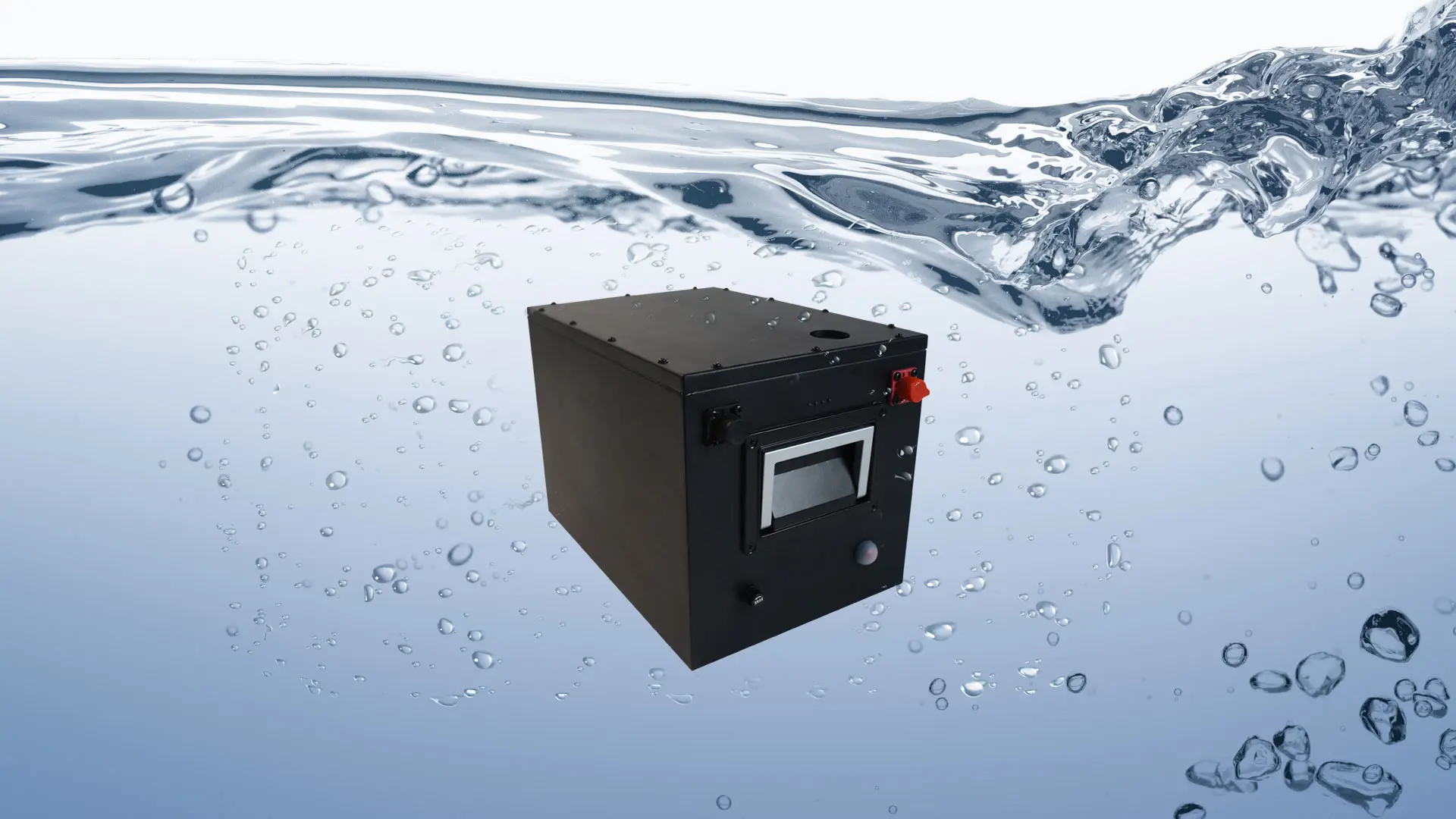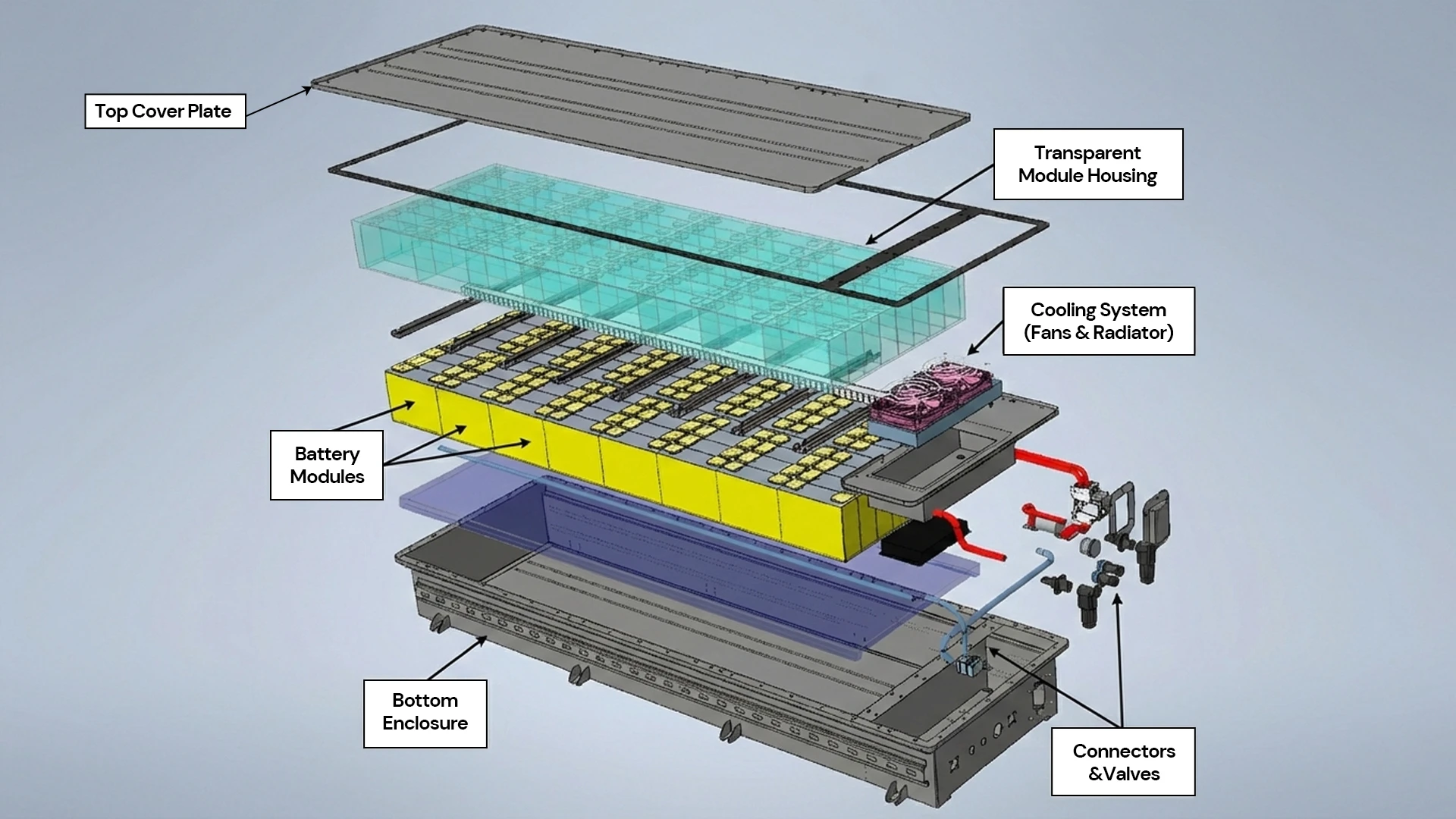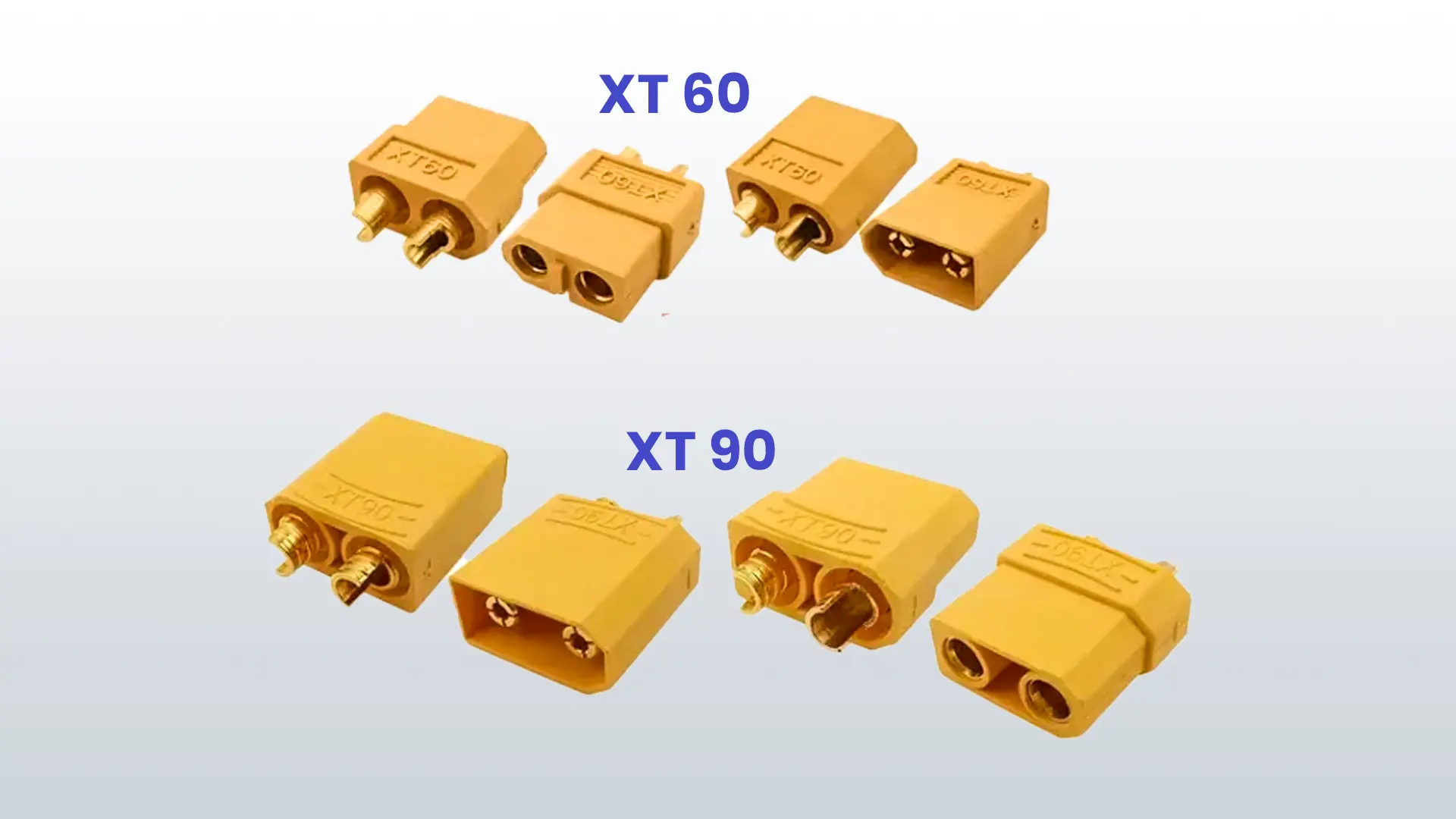
In our Comprehensive Guide to IP Ratings, we made a point worth repeating here: an IP rating describes the enclosure, not the whole battery system. Nowhere does that gap turn into a real field failure more often than at the connector. This article covers how waterproof connectors actually achieve their seal, why they fail in practice, and what needs to be specified beyond a headline IP number — the same system-level standard behind every waterproof battery pack CMB designs.
What Is a Waterproof Battery Connector?
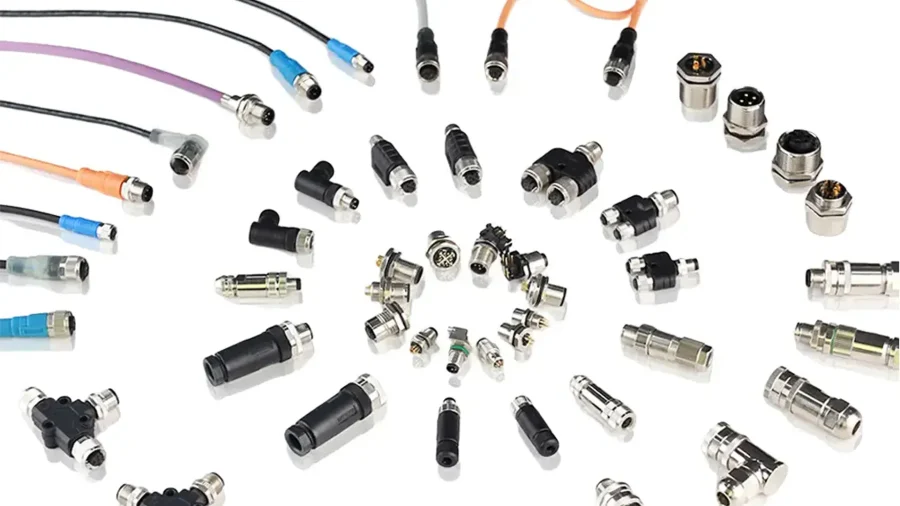
A waterproof battery connector is a detachable plug-and-socket assembly whose mating interface is sealed so that water cannot reach the battery’s internal electronics. Its basic job is to carry current or signal between two points while staying detachable,so equipment can be assembled, serviced, and upgraded. The waterproof seal is layered on top of that base function: when the plug and socket mate, the gap between them is sealed so moisture can’t travel along that path into the electronics.
That seal is usually built in three layers, stacked for redundancy rather than relying on any one of them alone:
- Structural sealing — one to three silicone O-rings or gaskets, compressed on insertion to close every microscopic gap. Silicone is the standard material because it stays flexible and resists aging across roughly −40°C to 105°C.
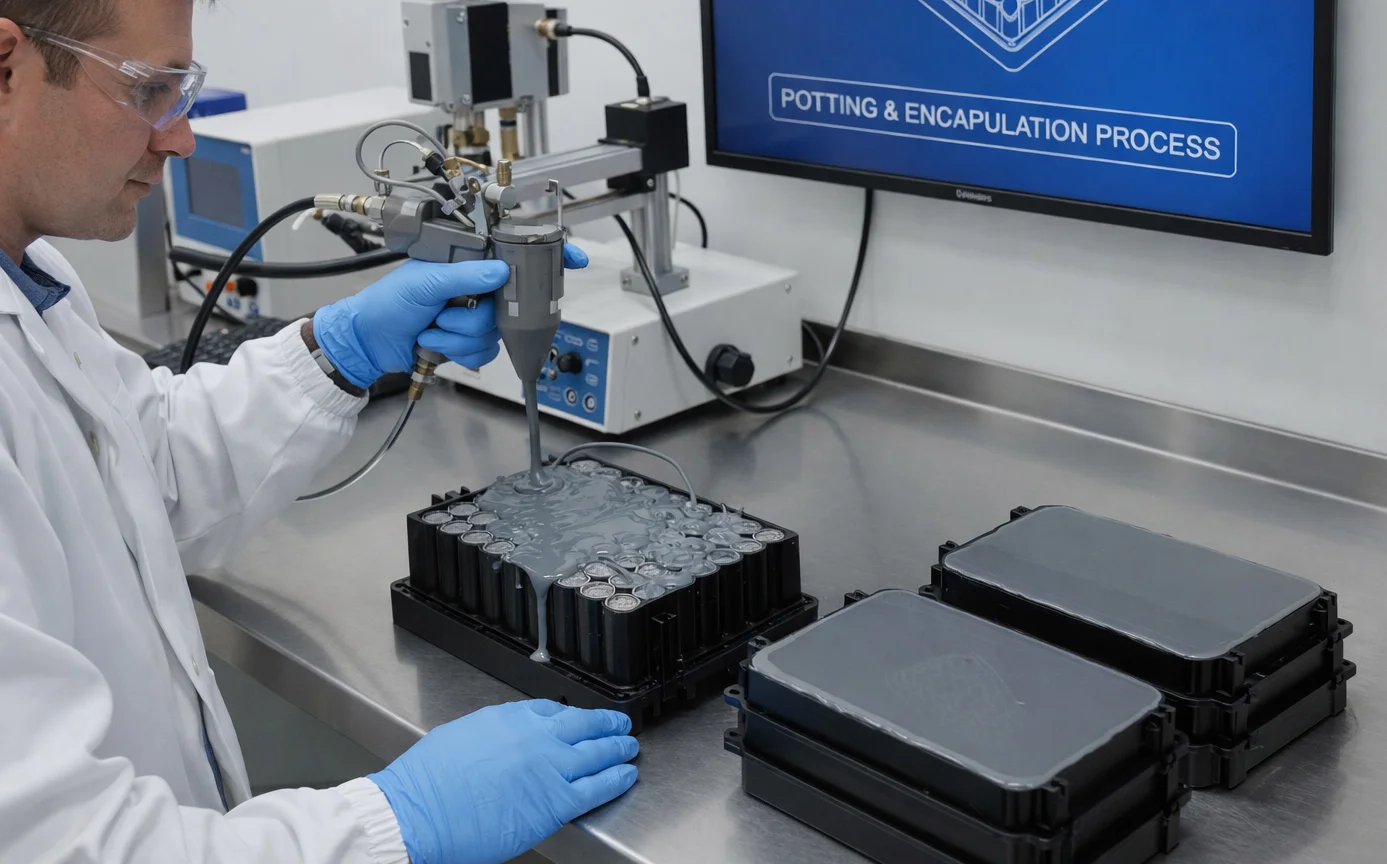
- Internal potting — the solder joints and wire terminations are encapsulated in epoxy or polyurethane resin. If the outer O-ring later ages and admits moisture, the potted terminals underneath still don’t short.
- Anti-loosening lock design — a threaded or snap-lock coupling that requires a deliberate twist or press to release, so vibration or an accidental tug can’t work the connector open.
Skip any one of these three layers, and the connector performs below its printed IP number once it’s actually in the field — which is why two connectors both labeled “IP68” can behave very differently after a year of service.
Four Waterproof Connector Locking Mechanisms
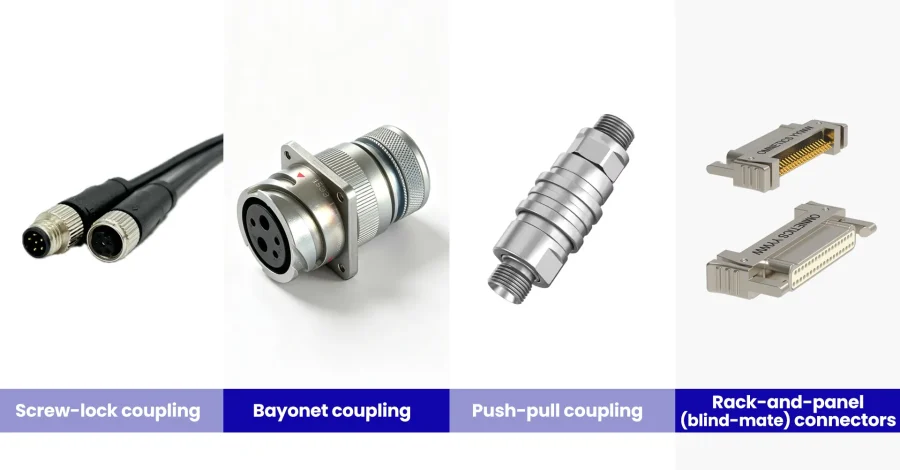
The right coupling type depends on the application as much as the environment:
- Screw-lock coupling — a threaded collar, secured against vibration with lock wire, a set screw, or a ratchet mechanism. Reliable and straightforward; typically used on larger connectors.
- Bayonet coupling — three pins spaced 120° apart on the socket engage a triple-lead cam groove on the plug’s coupling nut, giving a fast, secure connection in a compact footprint — useful where space is tight and quick disconnects matter.
- Push-pull coupling — spring-loaded locking tabs snap into a groove on the socket; pulling the cable won’t separate the connection, but pulling back the outer sleeve releases it cleanly. Common where a twisting motion isn’t practical.
- Rack-and-panel (blind-mate) connectors — for equipment that mounts into a frame and connects without the installer seeing the mating point; floating or spring-loaded contacts compensate for minor misalignment during blind insertion.
Where Waterproof Battery Connectors Actually Fail
Field data across battery-powered equipment points to the same pattern again and again: most water ingress doesn’t happen through the enclosure wall. It happens at the wire harness interface. A sealed housing paired with an under-engineered connector is still, in practice, an unsealed system.
A few failure patterns show up repeatedly:
- A connector labeled IP67 lets water in at the rear of the housing, where the cable exits — the mating face was tested and sealed properly, but the cable-to-housing transition was never evaluated with the same rigor.
- The sealing ring at the mating face degrades and detaches over time, especially under repeated thermal cycling.
- Mounting screw holes on the housing seep water gradually, and the moisture condenses inside over months — quietly corroding the BMS and connection points long before anyone notices anything is wrong.
None of these show up in a single lab immersion test on a fresh sample. They surface months into deployment, which is exactly why connector engineering deserves the same attention as the enclosure — not a part picked off a catalog page after the enclosure design is already finished.
IP68 Waterproof Connector: Mated vs. Unmated Protection
An IP68 rating on a connector datasheet usually applies only when the connector is fully mated. Plenty of connectors offer no meaningful protection — or a much lower rating — once disconnected, unless they’re specifically designed with a sealed cap or self-sealing feature for that state.
This distinction matters for any battery that might be serviced, swapped, or shipped with the connector disconnected — true of most industrial and robotics deployments at some point in their lifecycle. The right question for a connector supplier isn’t “is it IP68?” It’s: “IP68 mated, unmated, or both — and tested under what conditions?” It’s the same discipline we apply to the enclosure itself in our IP ratings guide: a bare rating with no stated test conditions is an incomplete specification, whether it describes the enclosure or the connector.
Waterproof Connector Types and Sealing Methods for Battery Packs
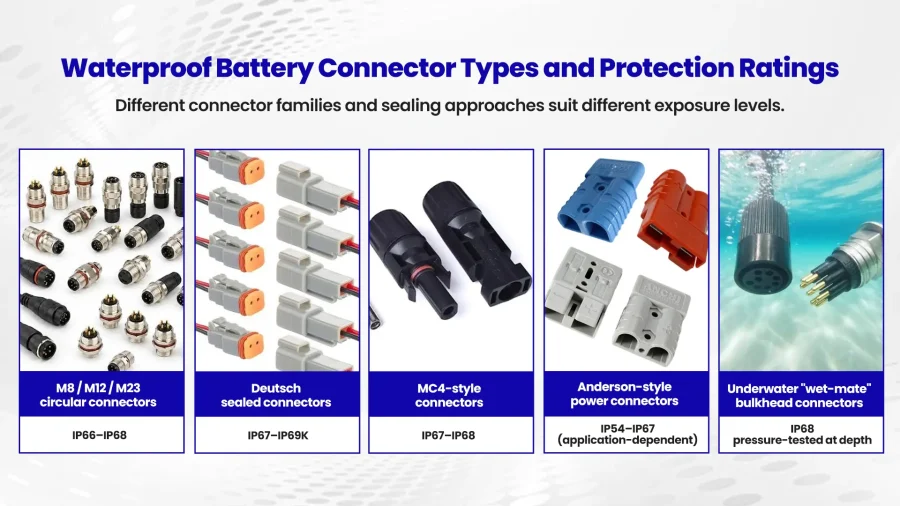
Different connector families and sealing approaches suit different exposure levels. For a broader primer on battery connector types beyond the waterproofing angle, the table below is a quick reference for matching the right option to your application, along with the reasoning behind it.
| Connector / Sealing Type | Typical Rating or Spec | Where It’s the Right Fit |
| M8 / M12 / M23 circular connectors | IP66–IP68 | Sensor and signal wiring, low-to-medium power, industrial robotics |
| Deutsch / automotive-style sealed connectors | IP67–IP69K | Automotive and off-road/heavy equipment circuits |
| MC4-style connectors | IP67–IP68 | Solar/PV strings, DC power interfaces |
| Anderson-style power connectors | IP54–IP67 (application-dependent) | High-current DC battery interconnects |
| Underwater “wet-mate” bulkhead connectors | IP68, rated both mated and unmated, pressure-tested at depth | Subsea ROV/AUV, deep-submersion instrumentation |
| O-ring compression seal | ~15–25% compression ratio | General-purpose connector and enclosure sealing |
| Face seal (machined or foam gasket) | Even compression across a flat surface | Battery covers, access panels |
| Button/membrane seal | Silicone membrane, slight interference fit | External switches and control buttons |
| Potting (epoxy/polyurethane) | Not field-repairable, highest reliability | High-vibration modules, permanently sealed subsea electronics |
For subsea and marine equipment specifically, the connector needs an IP68 rating in both the mated and unmated condition, verified at the actual operating depth — not just splash or shallow-immersion conditions.
One detail that’s easy to miss at the design stage: every unused port on a multi-pin connector or housing needs a blind plug. A pinhole left open for a future sensor is a direct water path if it’s never capped — the rest of the sealing system doesn’t matter if one hole was overlooked.
Not every connection on a waterproof battery pack is a multi-pin connector, either. The battery’s own positive and negative terminals are just as often a ring terminal or a spade (flag) terminal, especially in marine systems, valued for a secure mechanical fit and a compact footprint.
In a saltwater environment, these terminals carry the same corrosion-resistance requirements as any other contact point on the pack — a well-made ring or spade terminal is only as reliable as the plating on it, which is why the material selection covered in the corrosion section below applies here too.
How Waterproof Connector Seals Work: Four Sealing Methods Explained
Knowing which sealing method is used at each interface — and whether it’s specified correctly for the application — says more about a supplier’s actual engineering depth than the IP number on the datasheet ever will.
An O-ring compression seal works by deforming an O-ring in a groove to fill the gap. Getting the groove cross-section and compression ratio right matters more than the O-ring material itself — a commonly cited target is around 15–25% compression, with a mating surface smooth enough (often specified around Ra ≤3.2μm) that it doesn’t scratch or bypass the seal.
A face seal presses two precision-machined or foam-gasketed flat surfaces together, typically for battery covers and access panels; the main risk is uneven compression that leaves one edge under-sealed. A button or membrane seal protects external switches with a silicone membrane forming a slight interference fit against the housing, with a sealing wall built in around the button’s full travel so it stays effective even fully pressed.
Potting casts the whole module in epoxy or silicone resin — the most reliable method available, but not repairable afterward, and only as good as the adhesion between the resin and the housing or components; poor adhesion creates a delamination path for moisture even inside a “fully potted” module.
Sealing at the pack enclosure level — gaskets, potting, and the pressure-equalization vents that prevent condensation inside a fully sealed housing — is its own topic, which we cover in depth in a companion article on waterproof battery sealing design.
Corrosion in Waterproof Battery Connectors: The Risk an IP Rating Doesn’t Cover
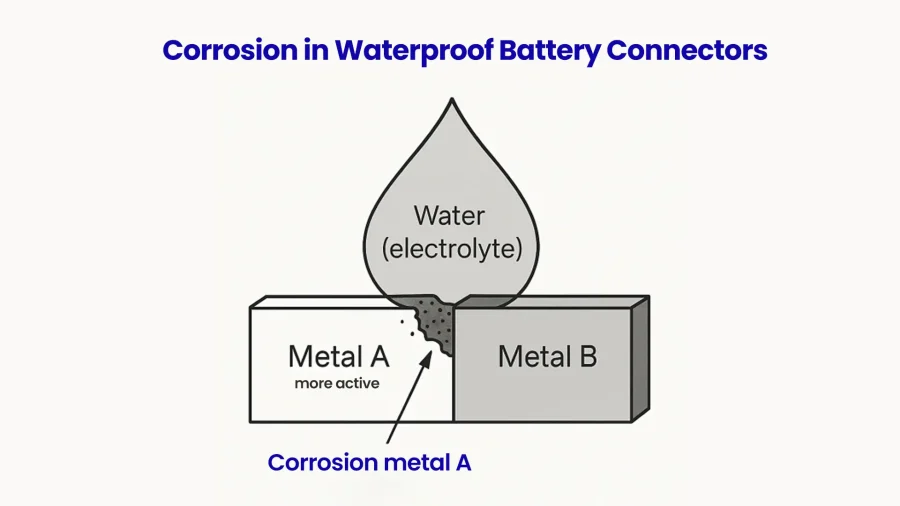
Saltwater is an electrolyte. When two dissimilar metals contact each other in a saltwater or salt-mist environment, galvanic corrosion can occur at the contact interface — a failure mode that has nothing to do with whether water breached the seal, and everything to do with material selection.
This is why marine-grade connectors and disconnect switches typically specify tinned or nickel-plated copper contacts rather than bare brass, which corrodes and increases contact resistance over time, along with material compatibility checks between the housing, fasteners, and any dissimilar metals in contact. Corrosion resistance gets evaluated separately from, and in addition to, the IP ingress rating — because a connection can stay perfectly watertight while corrosion at an exposed contact point quietly raises resistance, generates heat, or causes an intermittent connection.
It’s a slower threat than an outright leak, but just as real. A water-compromised connector interface can also lower local insulation resistance and create a leakage-current risk; the severity scales with system voltage, but the underlying risk is never zero, even in the lower-voltage industrial and robotics packs CMB typically works with.
Waterproof Battery Disconnect and Isolator Switches
Disconnect and isolator switches — used to physically cut power for safety, storage, or maintenance — face the same environmental exposure as connectors, plus mechanical load from repeated switching. In marine and outdoor industrial applications, they’re typically specified with IP66–IP68 sealing at the shaft or actuator penetration, which is a harder sealing challenge than a static gasket because it has to seal around a moving part.
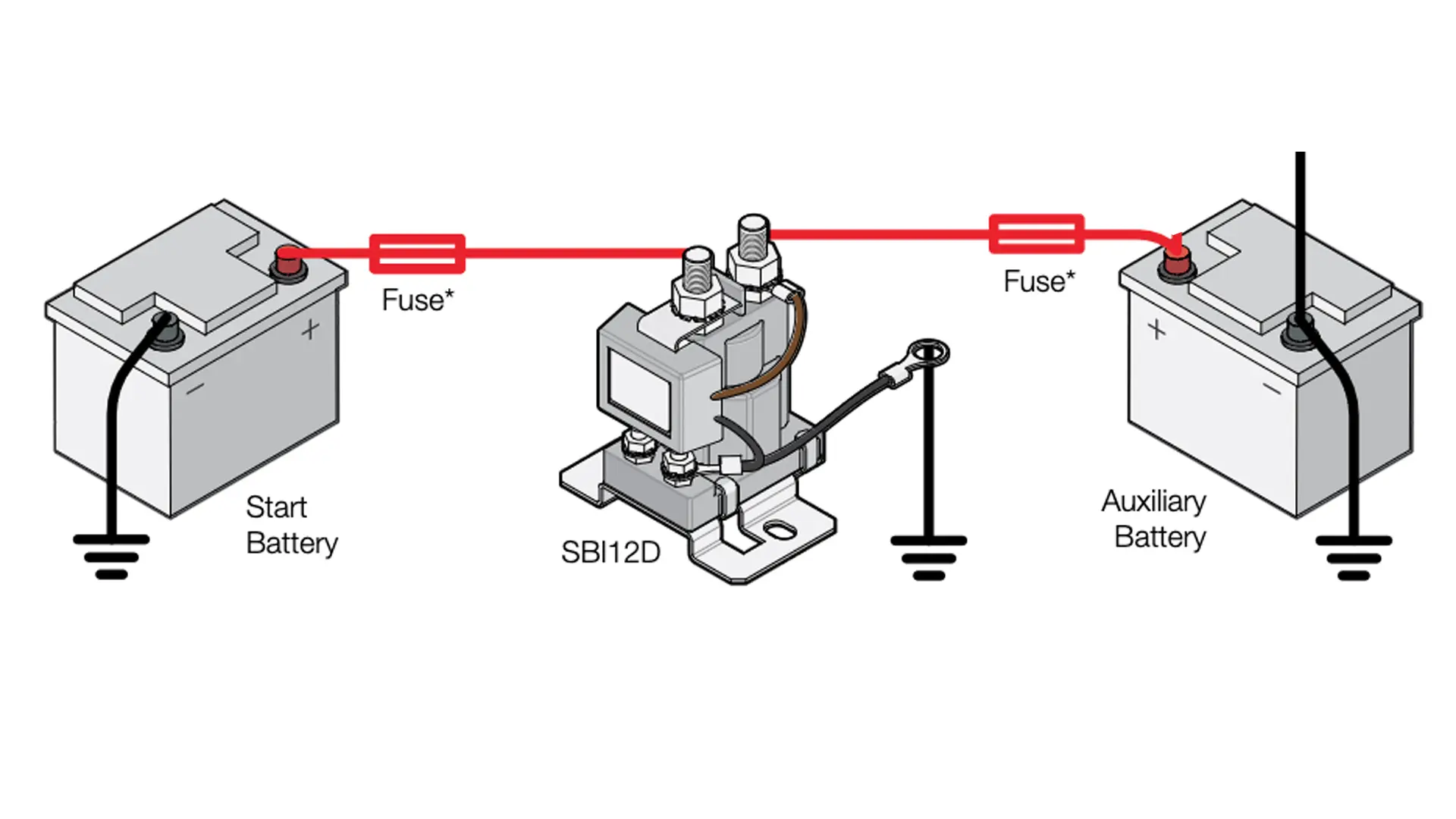
Continuous current ratings are sized with margin above the pack’s actual draw — heavy-duty marine disconnect switches commonly sit in the 200–300A continuous range, with higher short-duration ratings for cranking or inrush conditions. Studs and contacts are typically tinned copper for the same corrosion reasons as connectors, and the mounting needs to tolerate vibration without loosening or partially rotating over time.
A waterproof battery disconnect switch and its penetration through the enclosure should be evaluated as part of the same sealing system as the main connector — not specified on its own and assumed to work simply because its datasheet lists an IP number.
Ring and Spade Terminals for Battery Connections
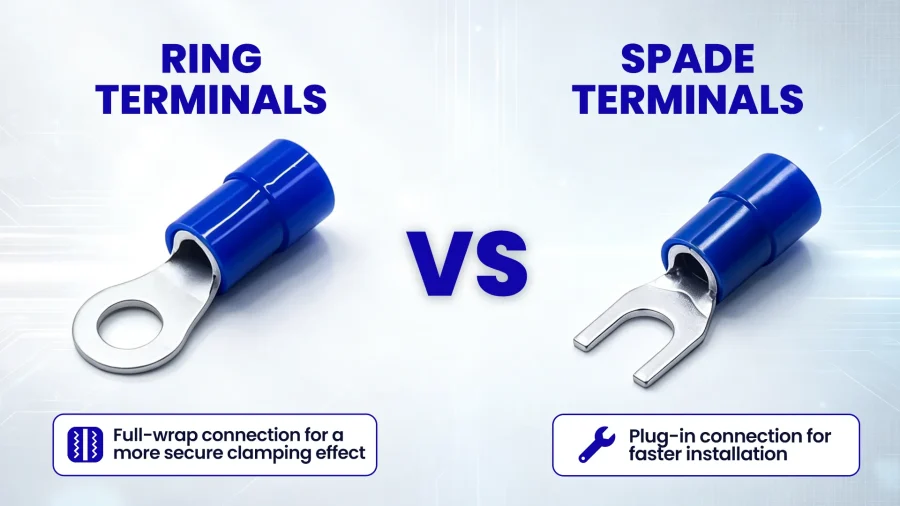
Most disconnect switches and battery posts terminate in a ring terminal or a spade (flag) terminal rather than a plug-style connector. Ring terminals fully encircle the stud, giving the most secure, vibration-resistant connection — the standard choice for permanent battery-to-switch or battery-to-busbar connections.
Spade terminals slide onto a flat blade contact for a quicker connect/disconnect, at some cost to vibration resistance. Both should be sized to the stud diameter and current rating, and in marine environments, both should use tinned copper for the same corrosion resistance reasons that apply to connector contacts.
Waterproof Connector and Disconnect Switch Selection Checklist
Environmental
- Mated AND unmated IP rating, with stated test conditions
- Water type (fresh, salt, brackish, chemical) and corrosion requirements
- Operating and storage temperature range
- Vibration and shock exposure
Sealing & assembly
- Which sealing method is used at each interface, and whether it matches the exposure level
- Blind plugs specified for every unused port
- Cable entry seal design — a dual-compartment grommet (separate seals for the jacket and individual conductors) is more robust than a single O-ring at the cable exit
Electrical
- Continuous and peak current rating, with margin above actual load
- Contact/terminal material (corrosion resistance vs. cost trade-off)
Mechanical
- Rated mating cycle life vs. expected service or swap frequency
- Mounting method and torque specification
Documentation
- An actual test report for the specific part and configuration — not just the printed IP number
- Whether the rating is independently tested or a manufacturer self-declaration
Waterproof Connectors for Subsea and Marine Battery Packs
Everything above applies to any outdoor or industrial battery pack, but the stakes compound in subsea and marine deployments — which is where CMB’s engineering focus sits. In our subsea robotics case — a 12.8V/105Ah LiFePO₄ pack validated for 5 meters of immersion over 3 hours — connector and sealing-interface selection had to be evaluated alongside the pressure environment at operating depth. A shallow-immersion-rated connector would have undermined the whole system regardless of how well the enclosure itself was sealed.
The same system-level thinking shaped our outdoor industrial IoT case (a 12.8V/50Ah LiFePO₄ pack, IP68, validated for 1 meter over 6 hours) and our agricultural robotics case (25.6V/120Ah LiFePO₄ with EVE cells and RS485 communication, IP67): the connector and cable interface were engineered as part of the waterproof system from day one, not added onto an already-finished enclosure.
If you’re specifying a battery for an application where water exposure is a real risk, this is exactly the kind of detail worth getting right before it becomes a field failure — and it’s the standard we hold every custom waterproof lithium battery pack to, from the connector out to the enclosure.
Waterproof Battery Connector FAQs
If My Battery Enclosure Is IP68, Do I Still Need to Worry About the Connector Separately?
Yes. The enclosure’s IP rating only describes the enclosure. The connector, cable entry, and any disconnect switch penetrating the enclosure are separate sealing interfaces that need their own rating, test conditions, and material specification — a sealed enclosure with an under-specified connector is not a waterproof system.
What Does “IP68 Mated and Unmated” Actually Mean?
Most connectors are only rated to their stated IP level when fully connected. “Unmated” protection means the connector still resists water ingress when disconnected, typically via a sealing cap or self-sealing design — this matters for any battery that might be serviced, shipped, or stored with the connector disconnected.
Why Do Some Waterproof Connectors Get Filled with Epoxy or Resin?
That’s internal potting — it encapsulates the solder joints and wire terminations so that even if the outer seal eventually ages and lets in moisture, the potted terminals underneath don’t short. It’s the most reliable sealing method, at the cost of no longer being field-repairable.
What’s a Blind Plug, and Why Does It Matter?
It’s a sealed cap for any connector port or pinhole that isn’t currently in use — for example, a position reserved for a future sensor. An uncapped port is a direct water path, regardless of how well the rest of the connector is sealed.
Why Do Marine Connectors Use Tinned Copper Instead of Standard Brass Contacts?
Saltwater acts as an electrolyte, and dissimilar or untreated metals in contact can corrode through galvanic action even inside a properly sealed connector housing. Tinned or nickel-plated copper resists this corrosion significantly better than bare brass, which is why it’s standard in marine-grade connectors and battery switches.
How Many Times Can a Waterproof Connector Be Mated and Unmated Before It Needs Replacing?
It depends on the connector family — industrial circular connectors are commonly rated for several hundred to a few thousand mating cycles, and the manufacturer’s datasheet should state this explicitly. If your application involves frequent servicing or battery swaps, check mating cycle life against your expected frequency of use rather than assuming it.