

Humanoid robots are rapidly moving beyond laboratory demonstrations and into real-world applications, including manufacturing facilities, outdoor inspection operations, home assistance services, and specialized industrial tasks.
To replicate human-like movements such as walking, jumping, lifting, balancing, and performing complex work activities, the battery serves as the robot’s primary power source. Battery performance directly determines operating runtime, making humanoid robot battery life one of the most important factors for robot manufacturers and system engineers. As the industry moves toward commercial deployment, understanding the current battery life of humanoid robots, battery capacity, and future battery technologies has become essential.
Why Are Humanoid Robot Batteries So Difficult to Design?
Compared with batteries used in consumer electronics and electric vehicles (EVs), humanoid robot batteries must operate under significantly more demanding conditions.
Engineers must address a unique combination of challenges, including: extremely confined installation spaces, aggressive lightweighting requirements, high-frequency power fluctuations, continuous vibration and mechanical shock, and wide operating temperature ranges.
These constraints make humanoid robotics one of the most technically challenging battery application sectors in the energy storage industry today.
To put it simply, here are the five “critical hurdles” that humanoid robot batteries must overcome:
| Dimension | Core Pain Point | Industry Status |
| Endurance | Battery capacity is limited by the robot’s weight; significant performance degradation occurs under high-intensity dynamic workloads. | Current industry data shows that battery life of current humanoid robots is typically between 2 and 4 hours under standard operating conditions. In high-dynamic applications such as running, lifting, or climbing, actual runtime may be even shorter. |
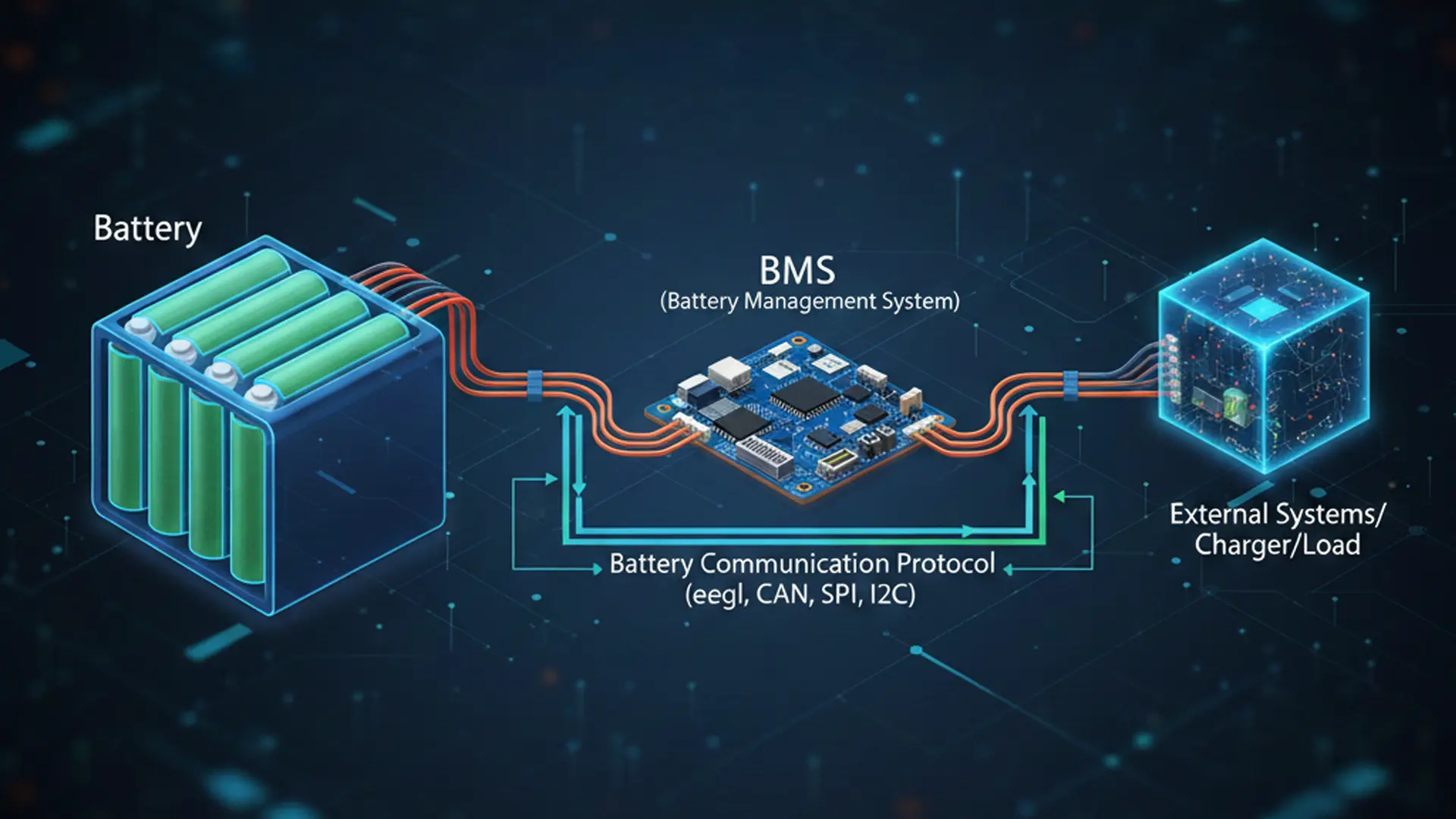
| Heat Generation | The sealed body provides minimal space for heat dissipation, causing heat buildup during high-rate discharge. | The BMS (Battery Management System) triggers power derating protection, leading to sluggish movements. |
| Dexterity | Irregularly shaped internal cavities make it difficult to fit standard battery packs. | High customization needs lead to long development cycles. |
| Cost | Low production volumes and high customization keep costs persistently high. | Solid-state batteries are currently significantly more expensive than liquid ones. |
| Lifespan | High-frequency vibration and high-rate charge/discharge cycles accelerate degradation. | Commercial models must meet long-term operational demands. |
Currently, traditional liquid lithium battery performance is approaching its physical limits. Semi-solid-state batteries have entered a transitional window for commercialization, and all-solid-state batteries have emerged as the ultimate direction for the industry to break through performance bottlenecks.
What Is the Typical Humanoid Robot Battery Capacity?
One of the most common questions engineers ask is about humanoid robot battery capacity kWh.
Most commercial humanoid robots today use battery packs ranging from:
- 1.5–2.5 kWh for lightweight service robots
- 2.5–4 kWh for industrial humanoid robots
- 4–6 kWh for heavy-duty autonomous humanoids
Battery capacity directly affects runtime, weight distribution, and dynamic performance.
Detailed Explanation of the Three Major Battery Technology Routes
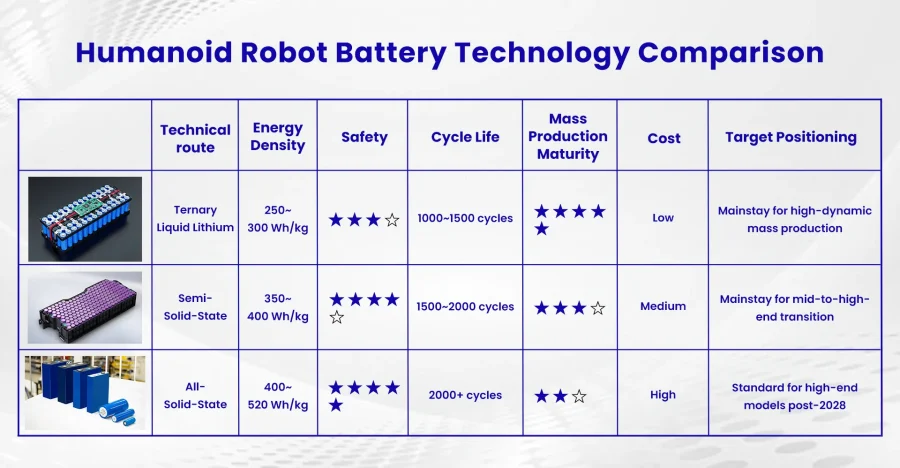
The humanoid robot industry has now established a clear pattern of technological iteration: liquid lithium batteries are the mainstay for mass production, semi-solid-state batteries are the core transitional technology, and all-solid-state batteries represent the ultimate form.
These three routes differ significantly in performance, cost, and suitable applications, requiring precise selection based on the robot model’s positioning.
Ternary Lithium Batteries (NMC/NCA) (Industry Mainstay for Mass Production, >70% Installation Rate)
Ternary cylindrical/pouch lithium batteries are currently the most mature and stable power solution for humanoid robots. Mainstream cells have an energy density of 250-300 Wh/kg, enabling 3C-5C continuous discharge and 10C-20C peak instantaneous discharge. Their core advantages include low degradation at low temperatures, fast dynamic response, and excellent consistency.
Suitable Scenarios:
Widely used in mainstream high-dynamic humanoid models like the Tesla Optimus, Unitree H1, UBTECH Walker X, and Vita Dynamics, they perfectly support high-intensity, explosive biomimetic movements such as running, jumping, sharp turns, and standing up with a heavy load.
Engineering Pain Points:
Due to strict lightweight constraints in the robot’s torso, the total battery pack weight is limited to 5-6 kg. Routine operational endurance is only 2-3 hours, with more noticeable degradation during high-intensity dynamic tasks.
Additionally, the sealed body has poor heat dissipation, and high-rate discharge easily causes localized heat accumulation and increased voltage differentials between individual cells, triggering the BMS power derating protection. This directly results in weak movements, shaky gaits, and degraded dynamic performance.
Lithium Iron Phosphate (LFP) Batteries (Dedicated for Safety-First Scenarios)
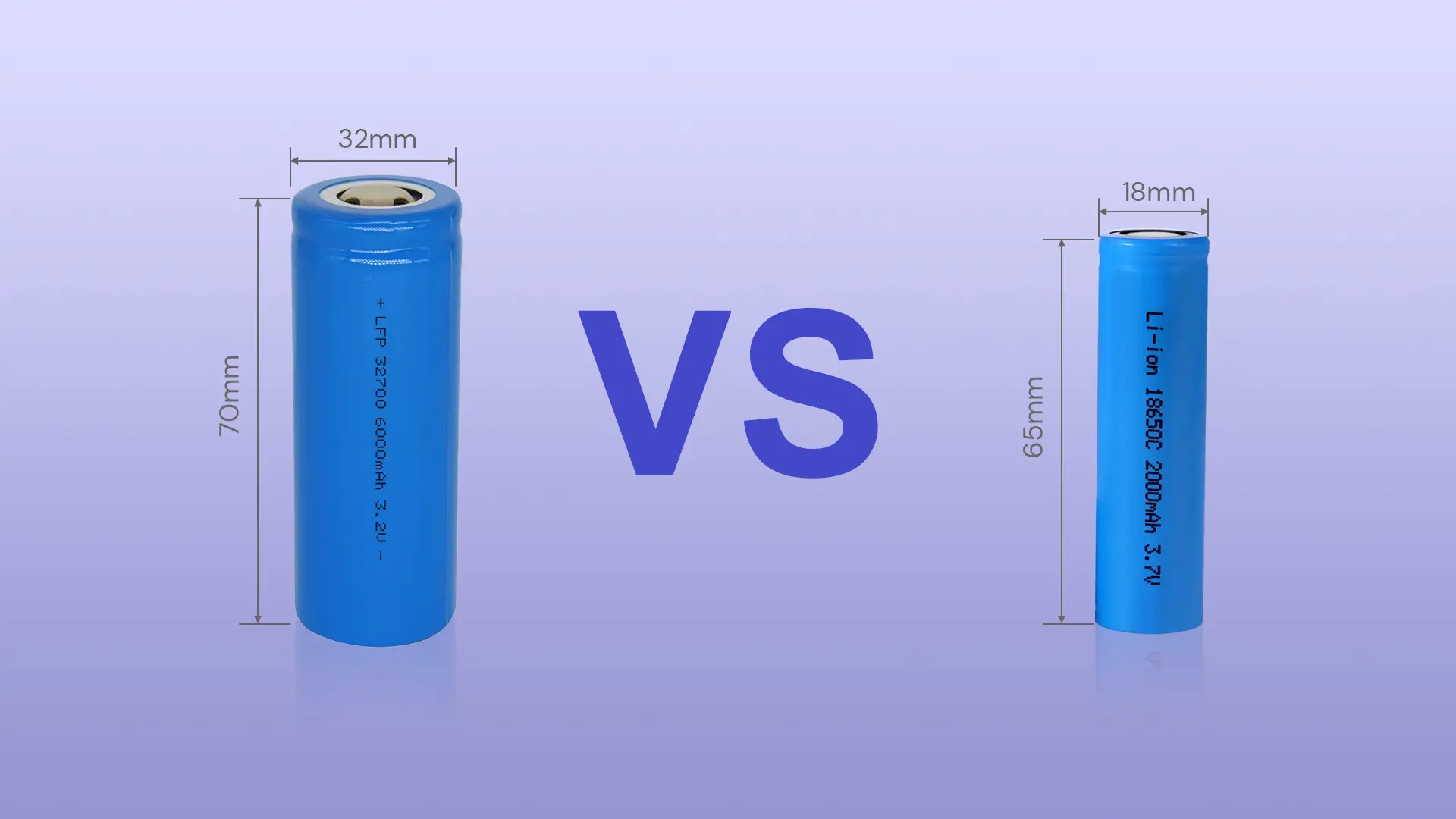
Lithium Iron Phosphate (LFP) cells have an energy density of 160-200 Wh/kg, which is lower than ternary lithium batteries. However, they offer exceptional thermal stability, a cycle life exceeding 3000 cycles, no risk of violent thermal runaway or explosion, and a significant cost advantage.
Suitable Scenarios:
Primarily for low-speed, low-dynamic applications like medical companionship, indoor commercial guidance, and home assistance. They are suited for service humanoid robots where safety is prioritized over endurance and explosive power, making them a high-value, cost-effective choice for mass-produced, low-speed models.
Semi-Solid-State Batteries (The Golden Transition Solution, 2026-2028)
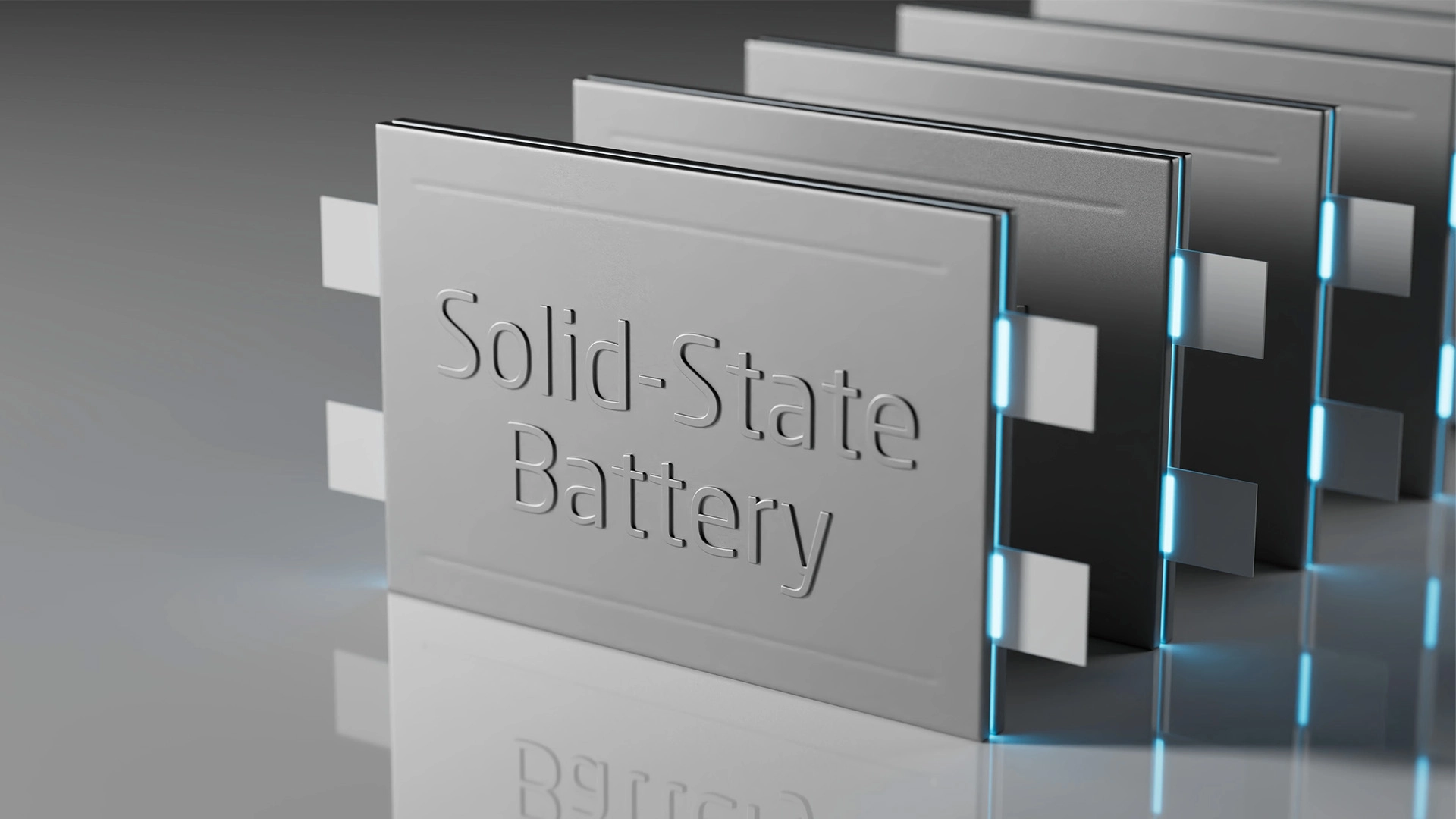
By replacing a portion of the liquid electrolyte with a solid electrolyte, semi-solid-state batteries combine the mass-production maturity of liquid batteries with the high-performance advantages of solid-state batteries.
Cell energy density is increased to 350-400 Wh/kg, and rate performance, thermal safety, and cycle consistency are comprehensively upgraded. Compared with current systems where humanoid robot battery life is often limited to 2–4 hours, semi-solid-state batteries can extend continuous operation to 6–8 hours.
This technology has now entered the sampling validation and small-volume trial production stage with leading robotics companies, making it the optimal solution for short-term performance upgrades in mid-to-high-end humanoid robots.
All-Solid-State Batteries (The Industry’s Ultimate Technical Answer)
All-solid-state batteries completely eliminate the liquid electrolyte, eradicating common industry pain points like leakage, swelling, and thermal runaway at their source.
Cell energy density can reach 400-520 Wh/kg, with an extended operating temperature range of -40°C to 80°C. They can also withstand ultra-high-rate pulse discharges and high-intensity vibration and shock conditions.
Industry analysts predict that by 2028, next-generation solid-state batteries could double the current battery life of humanoid robots, enabling full-shift operation without frequent charging.
Unlike the cost-priority logic of the EV industry, the humanoid robot industry prioritizes performance iteration and deemphasizes short-term costs. This positions all-solid-state batteries to potentially be the first to achieve large-scale commercialization in the humanoid robotics arena, becoming the standard power system for high-end humanoid robots after 2028.
The Five-Dimensional Hardcore Selection Criteria for Humanoid Robot Batteries
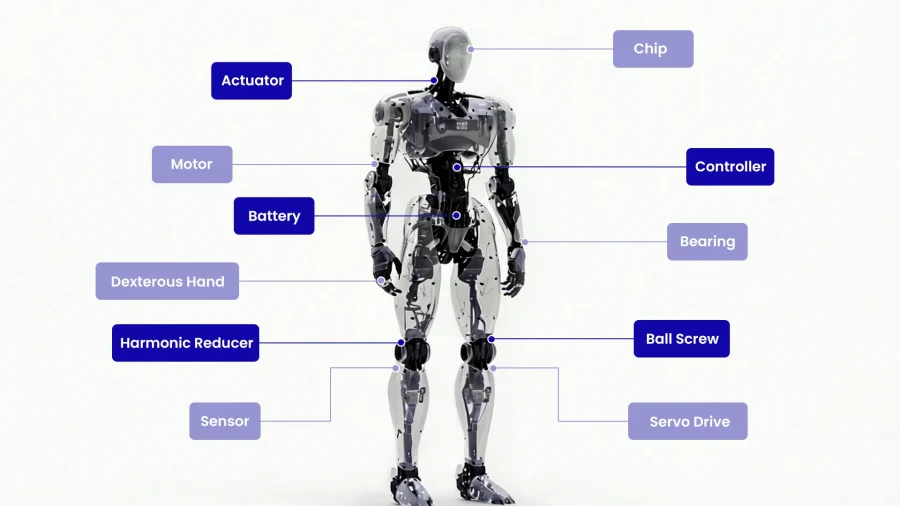
While consumer batteries focus on sleek integration and EV batteries on durability and stability, a humanoid robot battery must be a pentagon-shaped all-rounder capable of handling extreme, all-weather operating conditions. These are the core assessment criteria for engineers during selection, solution design, and structural integration:
Ultra-Lightweight and High Integration
Due to the robot’s compact torso structure and limited space, the battery must maximize energy storage within a 5-6 kg weight limit and a confined volume. This is to completely avoid the vicious cycle in power systems where “adding weight reduces endurance.”
Ultra-High Dynamic Power Response
Instantaneous power can reach several kilowatts during actions like jumping, landing, or switching postures under load. The battery must have millisecond-level voltage drop control, with no power lag or output stuttering, to ensure biomimetic movements are crisp, fluid, and stable.
Ultra-Wide Temperature Range Stability
It must adapt to complex scenarios like high-temperature industrial workshops, outdoor inspections in severe cold, and alternating high/low temperatures in the field. Capacity, voltage, and power output must remain stable without significant fluctuations across the full temperature range to guarantee operational stability.
Ultra-High Safety Redundancy
The sealed body leaves no redundant space for heat dissipation, and the battery is in very close contact with wiring harnesses, motors, and the main control board. It must pass extreme tests, including nail penetration, crush, thermal shock, vibration/drop, overcharge/over-discharge, and short circuit, to eliminate cascading safety risks from thermal propagation.
High Consistency and Long Cycle Life
Requirements for voltage differential and internal resistance consistency among individual cells are much stricter than for standard lithium battery devices. It must also meet the long-term cyclic operational needs of commercial models, reducing later maintenance and replacement costs and enhancing the overall lifecycle value.
Practical Selection Strategies for Engineers (7 Scenarios)
Selection is not about choosing “the best battery,” but about choosing “the most suitable battery for this specific robot.” The following 7 scenario-based strategies are distilled from real-world operational pain points and can be directly referenced based on your needs.
Scenario 1: High-Dynamic Industrial Type(Running/Jumping/Heavy Load/High-Frequency Tasks)
Core Pain Point: Instantaneous high-current discharge + continuous vibration and shock.
Recommendation: Choose high-rate cylindrical cells from Azure V WeShare / Panasonic / Lishen, etc. They have robust explosive power and remain reliable under vibrational stress. Avoidance Tip: Standard prismatic batteries are prone to weak solder joints and electrode breakage under high-frequency shock; the cylindrical structure is inherently vibration-resistant.
Upgrade Path: Farasis Energy’s sulfide-based solid-state solution offers doubled energy density and a higher thermal runaway threshold, suitable for next-generation industrial models.
Scenario 2: Indoor Service/Medical Companion Type (Safety First)
Core Pain Point: Long-duration, low-rate discharge + extremely low fault tolerance
Recommendation: Choose Gotion High-tech’s LFP solution. The thermal runaway temperature exceeds 500°C, and cycle life is over 3000 cycles—potentially outlasting the robot itself. Medical scenarios require NMPA certification; Gotion already has a track record of supplying medical batteries.
Upgrade Path: Solid-state battery solutions from Qingtao Energy / Talent New Energy balance safety with small size, suitable for high-end companion models.
Scenario 3: General Mass-Production Type (Fast Implementation, Cost Control)
Core Pain Point: Long BMS development cycle + complex thermal management adaptation + slow supplier certification.
Recommendation: Opt for standardized battery modules from suppliers like Hanshan Intelligent Technology, where the BMS/structure/thermal management are delivered as an integrated unit, ready to use out of the box. Suitable for seed/angel round teams, proof-of-concept machines, and small-batch trial production. Developing a custom battery pack from selection to validation takes at least 6-9 months, whereas standardized modules can compress this to 2-3 months.
Scenario 4: Mid-to-High-End Long-Endurance Type (6-8 Hours Continuous Operation)
Core Pain Point: Sufficient performance without prohibitive cost, safe but not too heavy.
Recommendation: Select semi-solid-state battery solutions from WeLion New Energy / Transimage Technology, etc. Their performance is between liquid and all-solid-state batteries, with manageable costs. Semi-solid-state is currently the most cost-effective solution: 30% lighter than LFP batteries and half the price of all-solid-state batteries.
Scenario 5: Extreme Environment Type (-40°C~80°C / Specialized Operations)
Core Pain Point: Power loss at low temperatures, swelling at high temperatures.
Recommendation: Choose solid-state battery solutions from Rui En New Energy / Talent New Energy for stable output over a wide temperature range, capable of enduring harsh conditions without special thermal insulation design. For outdoor winter patrols in the north or high-temperature material handling in smelting workshops, liquid batteries simply cannot cope. For specialized overseas industrial/military scenarios, the customized solutions from CM Batteries (CMB) are also worth considering—CMB designs and manufactures to military-grade reliability standards, specifically validating and delivering products for harsh environments like high temperature, strong vibration, humidity, and high pressure. With its comprehensive extreme-condition testing procedures, it’s a reliable backup for engineering teams pursuing “zero failure under extreme conditions.”
Scenario 6: Irregularly-Shaped, Compact Body Type (Customization for Constrained Space)
Core Pain Point: The robot’s internal cavity is irregular, and standard battery packs don’t fit.
Recommendation: Choose pouch solid-state battery solutions from Hoppt Battery / Farasis Energy / Xin Jie Energy for their flexibility to fit into irregularly shaped cavities. Pouch cells offer 15-20% higher energy density than cylindrical/prismatic ones. In the precious, confined space of a robot body, every gram counts.
Scenario 7: Forward-Looking Solid-State Mass Production Type (Technological Positioning)
Recommendation: Choose Jun En New Energy / Talent New Energy / Xin Jie Energy, all three of which already possess small-batch delivery capability. Suggested Strategy: Introduce semi-solid-state for validation in 2026, then switch to all-solid-state mass production in 2027. This two-step approach reduces technological risk.
Summary of Battery Technology Evolution Trends
Short-Term (2026)
Liquid lithium batteries will continue to dominate the market. Standardized battery modules will accelerate their spread. Semi-solid-state batteries will gradually penetrate mid-to-high-end models. The industry will continue to tap the remaining performance potential of liquid batteries mainly through BMS algorithm optimization, thermal management upgrades, and structural integration iterations. Simultaneously, many solid-state manufacturers will complete sampling and small-batch testing, laying the groundwork for large-scale implementation.
Mid-Term (2027–2028)
Semi-solid-state batteries will achieve large-scale commercialization, becoming the standard power system for mid-to-high-end humanoid robots. All-solid-state battery production capacity will gradually ramp up, with leading solid-state manufacturers finalizing technology and achieving mass production. Overall robot endurance will exceed 8 hours, fully covering commercial daytime continuous operation scenarios.
Long-Term (2029+)
All-solid-state battery technology will be fully mature with declining costs. High-density cells exceeding 400 Wh/kg will be widely adopted, completely shattering the dual shackles of insufficient endurance and safety for humanoid robots. This will enable all-weather, uninterrupted continuous operation, making solid-state batteries the absolute mainstream power solution for humanoid robots.
Landmark Industry Cases Already Implemented
The XPENG IRON humanoid robot was the first to apply all-solid-state battery technology. Leveraging the advantages of lightweighting and high energy density, it achieved a dual breakthrough: a 30% weight reduction and a 30% increase in battery capacity. The robot’s solid-state battery safety standards far exceed those for automobiles; it can withstand 250°C high temperatures for 1 hour without thermal runaway, endure a 300G acceleration impact, and resist ignition after a 3mm nail penetration.
EngineAI released the full-size general-purpose humanoid robot T800, innovatively equipped with the industry’s first high-performance solid-state power battery specifically developed for humanoid robots. The endurance time was increased to 4-5 hours, breaking the bottleneck of traditional batteries. Its leg’s full-joint active cooling system synergizes with the solid-state battery, ensuring stable output for the robot during high-intensity tasks.
For humanoid robot R&D engineers, the power battery is by no means a simple power supply accessory. Rather, it is a core powertrain system integrating cell performance, structural integration, thermal management control, BMS algorithms, and a safety protection system. The robot’s dexterity, operational stability, and commercial implementation value ultimately depend on the level of advancement in powertrain technology.
FAQ: The 7 Most Frequently Asked Questions by Engineers
What battery is used in a humanoid robot?
Currently, mainstream mass-produced models primarily use ternary liquid lithium batteries (21700 cylindrical/pouch), accounting for over 70% of installations. Mid-to-high-end models are gradually introducing semi-solid-state batteries. All-solid-state batteries are in the small-batch validation phase and are expected to become widespread around 2028.
What is the average humanoid robot battery life?
Today, the average humanoid robot battery life ranges from 2–4 hours for commercial systems and up to 8 hours for advanced semi-solid-state battery platforms. Farasis Energy’s sulfide-based solid-state cell has demonstrated 11 hours of long-duration runtime in actual tests.
When will all-solid-state batteries be mass-produced for humanoid robots?
It is estimated that by 2027-2028, leading manufacturers such as CATL (Contemporary Amperex Technology Co., Limited), Farasis Energy, and Jun En New Energy will begin small-scale mass production. The conditions for large-scale implementation are expected to be in place after 2029.
How often do humanoid robot batteries need to be replaced?
Liquid batteries have a cycle life of about 1000-1500 cycles under high-rate operating conditions. LFP batteries can exceed 3000 cycles. Semi-solid/all-solid-state batteries have even longer lifespans. The comprehensive maintenance cycle for commercial models is typically 2-5 years.
Which is safer, solid-state or liquid batteries?
Solid-state batteries fundamentally eliminate the risks of leakage and thermal runaway by completely removing the liquid electrolyte, making them significantly safer than liquid batteries. They are especially suitable for applications with extremely high safety requirements, such as confined spaces and medical scenarios.
How do humanoid robot batteries solve the heat dissipation problem?
Mainly through three levels: cell selection (solid-state batteries have a higher thermal runaway threshold), BMS thermal management algorithms (dynamic derating protection), and structural integration (liquid/air cooling module design). CATL’s integrated liquid cooling system is one of the industry-leading solutions.
How to balance endurance and weight during selection?
The core principle is to maximize energy storage density within the 5-6 kg weight limit. Semi-solid-state pouch batteries are currently the most cost-effective solution. Flexible pouch cells are recommended for irregularly shaped bodies. For the pursuit of ultimate lightweighting, refer to the custom solutions from Hoppt Battery/Xin Jie Energy.


One thought