Choosing between a sodium-ion battery and LiFePO4 comes down to one question: how cold does your equipment actually get? This sodium-ion battery vs LiFePO4 comparison uses real bench data, not marketing claims, to answer that question for extreme-cold industrial applications. We tested a 48V 30Ah sodium-ion pack down to -40°C, under both light and heavy discharge loads, and compared the results against published LiFePO4 performance. If you’re weighing LiFePO4 vs sodium ion battery technology for unattended outdoor equipment, this article gives you the verified numbers behind that decision.
Quick Answer
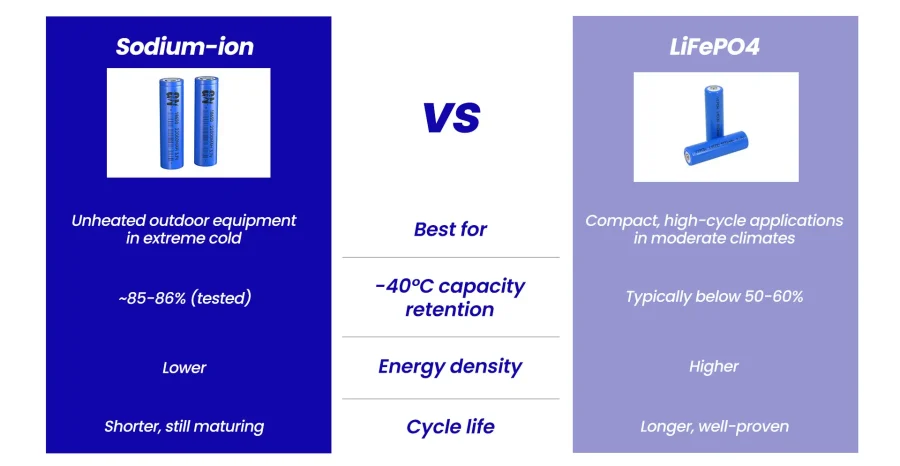
Sodium-ion batteries hold roughly 85-86% of their rated capacity at -40°C, based on independent bench testing on a 48V 30Ah production pack — and that number barely moves even under a heavier discharge load. LiFePO4 still wins on energy density and cycle life, and it remains the more mature, better-documented technology overall.
The short version: if your equipment has to run unattended below -20°C without a heating element, sodium-ion is the more dependable choice. If you need maximum energy density in a compact footprint and your equipment lives somewhere temperate, LiFePO4 is still the stronger pick.
Sodium-Ion Battery vs LiFePO4: Which Battery Is Better in 2026?
Why Extreme Cold Is a Battery Problem?
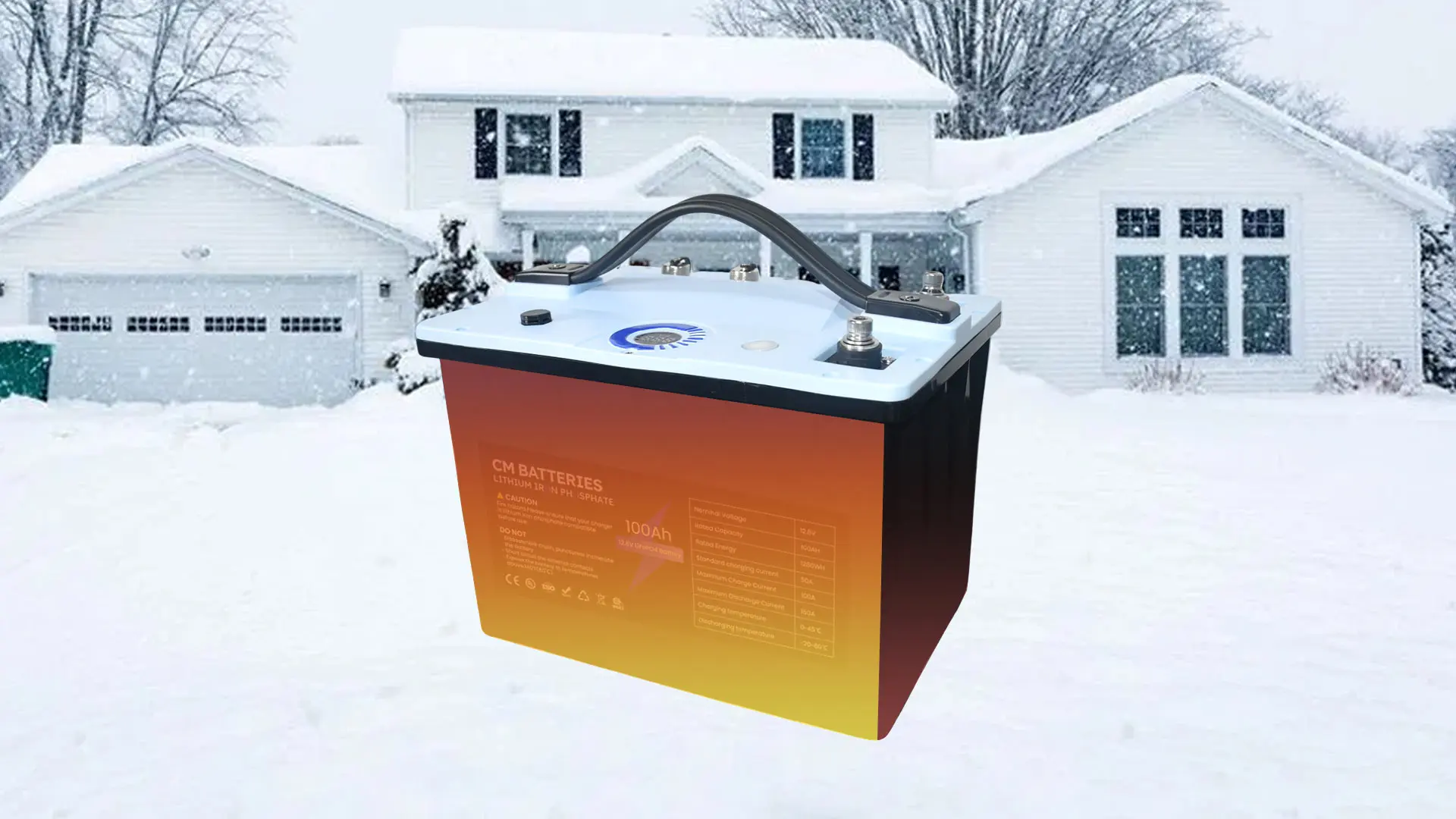
Every winter, the same failure shows up in field reports from equipment operators across Northeast China, Scandinavia, and the northern US: a battery that tested fine in the lab loses half its usable capacity the moment temperatures drop below -20°C. For consumer electronics, that’s an inconvenience. For a remote base station, a cold-chain tracker, or an unmanned monitoring station, it’s a service call, a data gap, or a device that simply doesn’t wake up. This is the specific problem sodium-ion technology was positioned to solve, and 2026 is the year it stopped being a theoretical answer.
Why Sodium-Ion Is Gaining Attention in 2026?
The shift has been fast. CATL’s Naxtra sodium-ion cells moved from announcement to mass production within the same year, and several Chinese automakers — Changan among them — have started shipping passenger vehicles with sodium packs specifically marketed for cold-region markets. We covered the broader mechanics of how sodium-ion technology actually works, and why the industry bet on it in the first place, in our earlier deep-dive on sodium battery technology.
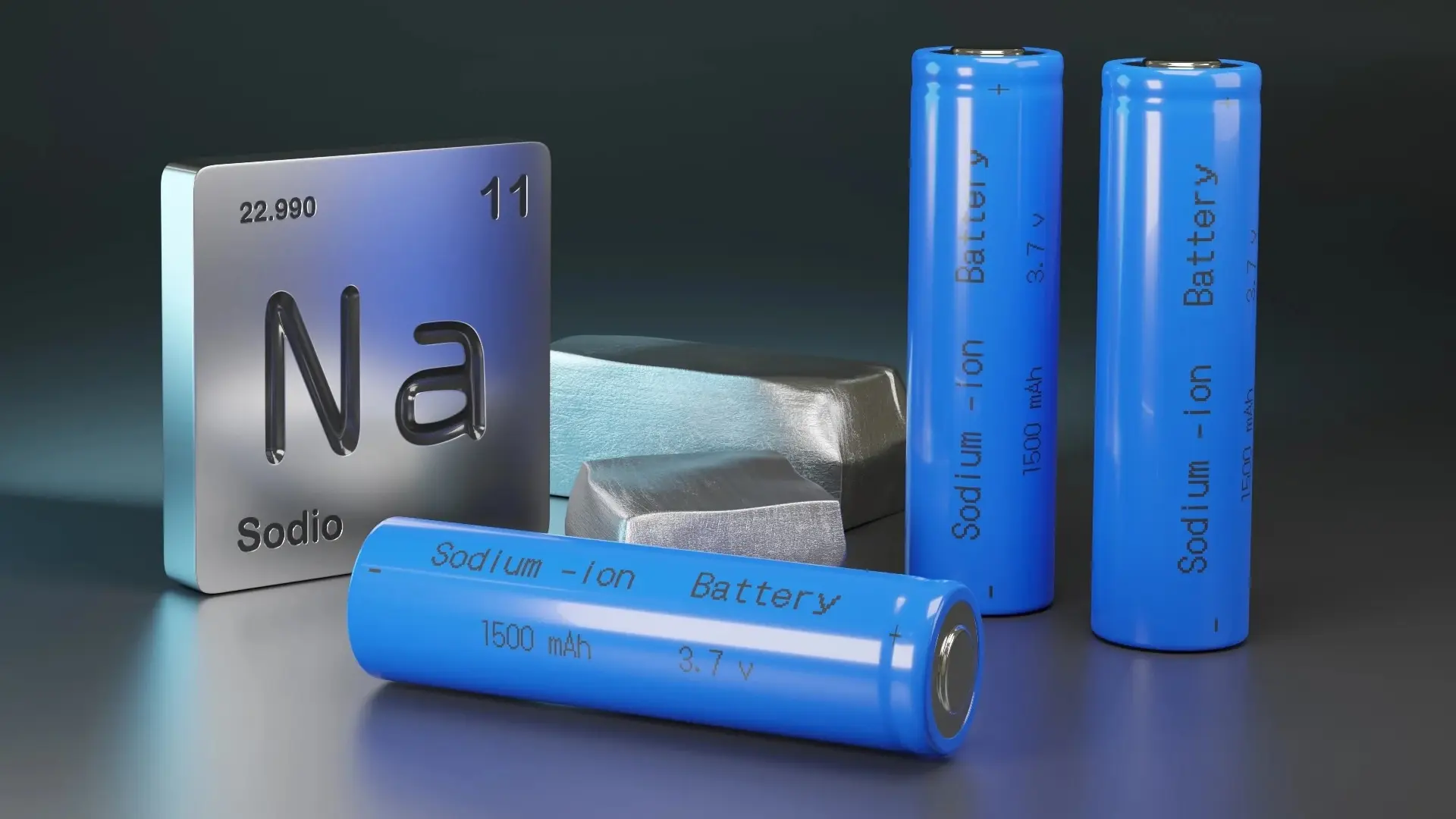
The short version: sodium sits right below lithium on the periodic table, behaves similarly enough that manufacturing know-how transfers over, and is roughly a thousand times more abundant in the earth’s crust — which matters a lot when lithium supply is concentrated in a handful of regions.
The Sodium-ion Supply Chain Is Still Maturing
Abundance and lab performance don’t automatically translate into a mature supply chain you can build a product roadmap around. The sodium-ion supplier landscape is still sorting itself out. Some companies are scaling fast; others are struggling to hit the production yields their pitch decks promised. We track this landscape in more detail in our rundown of the sodium-ion battery companies to watch in 2026, and mid-2026 gave a useful case study in why that tracking matters: reports surfaced that Natron Energy, one of the more visible US-based sodium-ion makers, was running into serious financial difficulty.
That doesn’t mean sodium-ion the chemistry is in trouble — it means sodium-ion the industry is still young enough that supplier due diligence matters as much as the datasheet. If you’re specifying batteries for equipment with a 5-10 year field life, who’s still in business matters just as much as what the cell can theoretically do.
Why Supplier Due Diligence Matters
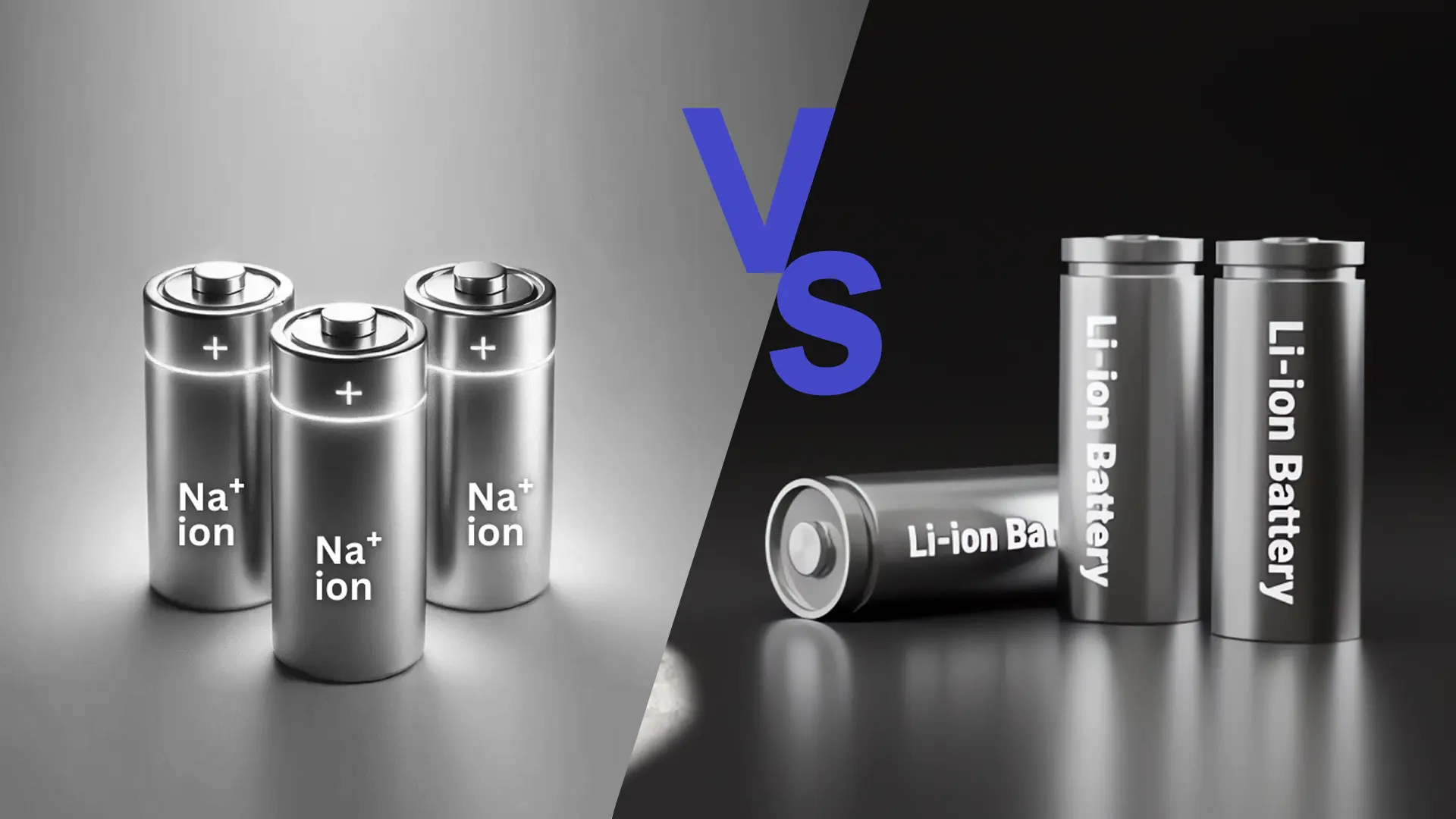
That’s the lens for the rest of this article. We’re not asking “which chemistry is better” in the abstract — plenty of content already covers that broad comparison, including our own breakdown of sodium-ion vs. lithium-ion battery differences. We’re asking a narrower, more useful question: for equipment that has to survive extreme cold, unattended, with no active heating — does sodium-ion actually hold up, and by how much? We’ll answer that with real bench data from our own pack, not marketing copy borrowed from a press release.
Sodium-Ion vs LiFePO4 Chemistry: What Actually Changes?
Sodium-ion and LiFePO4 batteries work on the same basic principle — ions shuttle between a cathode and an anode during charge and discharge. What changes is the ion itself, and that single substitution ripples through the entire cell design. (For a broader side-by-side of sodium-ion against lithium-ion chemistries in general, see our detailed comparison guide; here we’re narrowing in specifically on the LiFePO4 comparison.)
| Component | Sodium-ion | LiFePO4 |
| Cathode material | Layered oxides, Prussian blue analogues, or polyanionic compounds (e.g. NaCuFeMnO-type) | Lithium iron phosphate (LiFePO₄) |
| Anode material | Hard carbon (soft carbon in some formulations) | Graphite |
| Current collector | Aluminum foil on both electrodes | Aluminum (cathode), copper (anode) |
| Nominal voltage | ~3.0–3.2V | ~3.2V |
| Ion radius | Larger (Na⁺) | Smaller (Li⁺) |
Two of these differences matter more than the rest for cold-weather performance. First, sodium-ion cells can use aluminum current collectors on both the cathode and the anode, because sodium doesn’t form the same alloying reaction with aluminum that lithium does at low voltage.
That simplifies manufacturing and cuts material cost, though it doesn’t directly change cold-weather behavior. Second — and this is the one that actually explains the data in the next section — despite having a larger physical radius, the sodium ion has a lower desolvation energy, meaning it sheds its surrounding solvent molecules more easily as it moves through the electrolyte.
In cold electrolyte, where viscosity increases and ion mobility generally drops, this property lets sodium ions keep moving with less resistance than lithium ions typically experience. That’s the electrochemical reason behind the capacity retention numbers below — it’s a structural property of the ion itself, not a claim we’re asking you to take on faith.
Performance Parameters: The Honest Comparison Table
No single chemistry wins across every metric, and any comparison that claims otherwise is selling something. Here’s where each one actually stands, with both sides of the trade-off included.
| Metric | Sodium-ion | LiFePO4 | Notes |
| Energy density | 100–175 Wh/kg | 150–210 Wh/kg | LiFePO4 wins — sodium packs need more physical space for the same capacity |
| Cycle life | ~1,500–3,000 cycles (some newer formulations claim higher) | ~3,000–6,000+ cycles | LiFePO4 has a longer, better-documented track record |
| -40°C capacity retention | ~85-86% (CMB16020256 test data, see below) | Typically below 50-60% in published third-party testing | Sodium-ion’s clearest advantage |
| Fast-charge capability | Generally faster; less prone to lithium-plating-type degradation in the cold | Good, but charging below 0°C carries a lithium-plating risk if not managed carefully | Slight edge to sodium-ion |
| Self-discharge rate | Somewhat higher (~3-5%/month in some published testing) | Lower | LiFePO4 wins — worth factoring in for long dormancy periods |
| Round-trip efficiency | ~90-93% | ~95-97% | LiFePO4 wins on efficiency |
| Safety approach | Intrinsic — chemistry itself resists thermal runaway | System-engineered — safety depends heavily on BMS and pack design | Different mechanisms, not a simple “winner” |
The pattern that emerges: LiFePO4 is the more efficient, longer-lasting, more energy-dense technology overall. Sodium-ion’s advantage is narrow but real — it shows up specifically in cold-weather capacity retention, which is exactly the metric that matters most for equipment operating in extreme climates without heating.
Cold-Weather Performance: Independent Test Evidence
Every retention percentage in this section is measured against a single reference point: the pack’s actual discharge capacity under ambient lab conditions. We don’t use the pack’s nameplate rating as the baseline — we use what it actually delivered on the bench.
Test 01 — Ambient Capacity Baseline
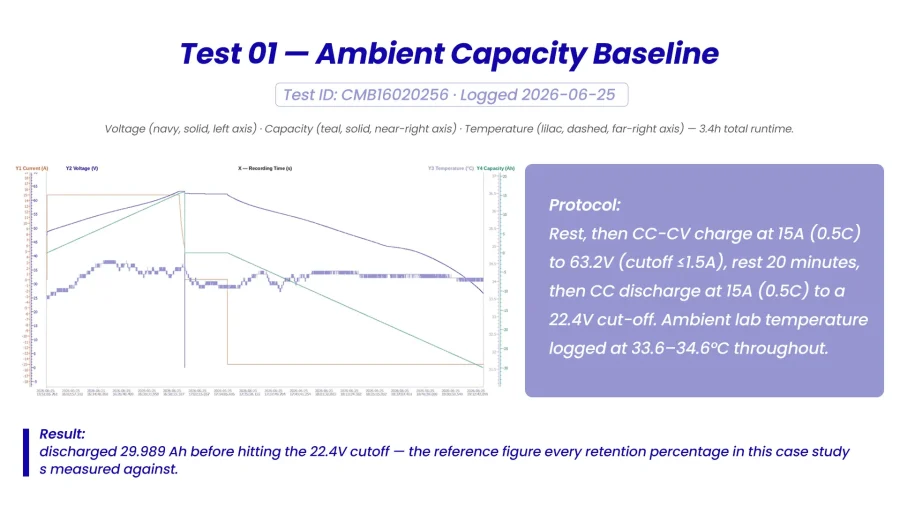
In Test 01, a 48V 30Ah low-temperature sodium-ion battery pack (Test ID: CMB16020256) was rested, then charged CC-CV at 15A (0.5C) to 63.2V with a ≤1.5A cutoff, rested for 20 minutes, then discharged CC at 15A (0.5C) to a 22.4V cutoff. Ambient lab temperature held at 33.6–34.6°C throughout the 3.4-hour run. The pack delivered 29.989 Ah — this is the number every cold-weather result below is measured against.
Test 02 — -20°C Charge / -40°C Discharge at 0.2C
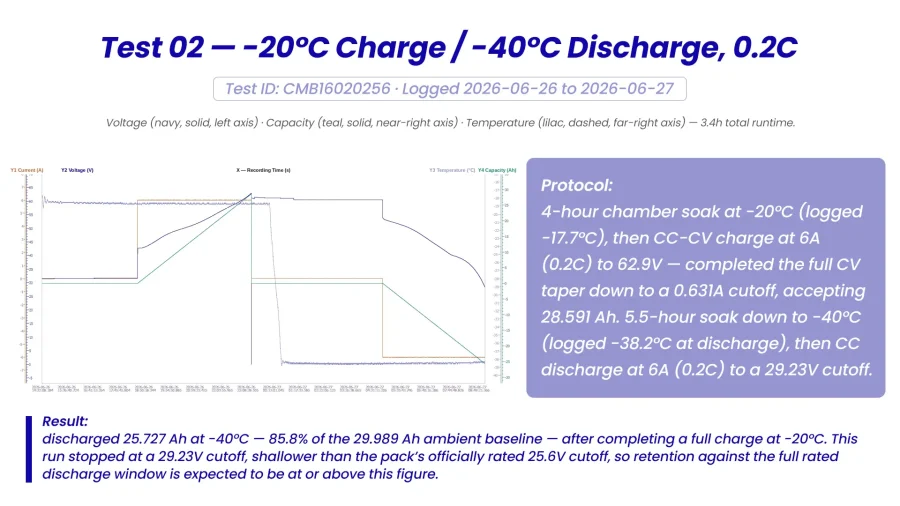
Test 02 replicated the cold-climate duty cycle a field-deployed pack would actually see: charge in the cold, then discharge in deeper cold. After a 4-hour chamber soak at a logged -17.7°C, the pack was charged CC-CV at 6A (0.2C) to 62.9V, completing the full CV taper down to a 0.631A cutoff and accepting 28.591 Ah. After a further 5.5-hour soak down to a logged -38.2°C, it was discharged at 6A (0.2C) to a 29.23V cutoff. Total runtime: 18.5 hours.
Result: 25.727 Ah discharged at -40°C — 85.8% of the 29.989 Ah ambient baseline, after completing a full charge cycle at -20°C. This run stopped at a 29.23V cutoff, which is shallower than the pack’s officially rated 25.6V cutoff, so retention against the full rated discharge window is expected to sit at or above this figure — meaning 85.8% is a conservative number, not an optimistic one.
Test 03 — -20°C Charge / -40°C Discharge at 0.5C
The result above holds at a light 0.2C discharge rate. The question that matters for field equipment is whether that number collapses once a device draws real current — start-up inrush, duty-cycle spikes, anything heavier than a slow trickle. Test 03 answers that directly.
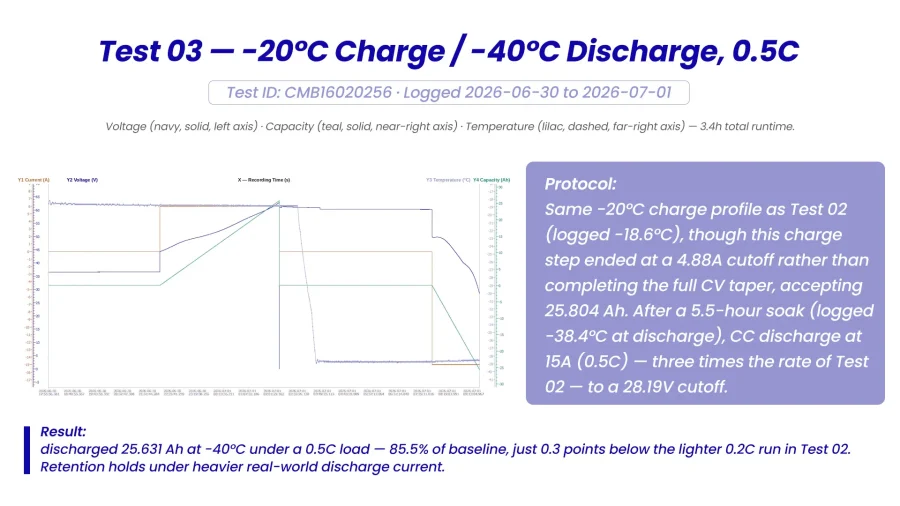
Using the same -20°C charge profile (logged -18.6°C this time, accepting 25.804 Ah — this charge step ended at a 4.88A cutoff rather than completing the full CV taper, a protocol difference we’re disclosing rather than smoothing over), the pack was soaked for 5.5 hours down to a logged -38.4°C, then discharged at 15A (0.5C) — three times the discharge rate of Test 02 — to a 28.19V cutoff.
Result: 25.631 Ah discharged at -40°C — 85.5% of baseline, just 0.3 percentage points below the lighter 0.2C run. At three times the discharge current, retention barely moved.
Does Sodium-Ion Capacity Collapse Under Heavier Loads?
That 0.3-point gap is the actual finding here. It means the -40°C capacity retention on this pack isn’t a number that only holds under gentle, best-case bench conditions — it holds under a load profile closer to what an unattended outdoor IoT device actually pulls when it wakes up, transmits, and goes back to sleep in the cold.
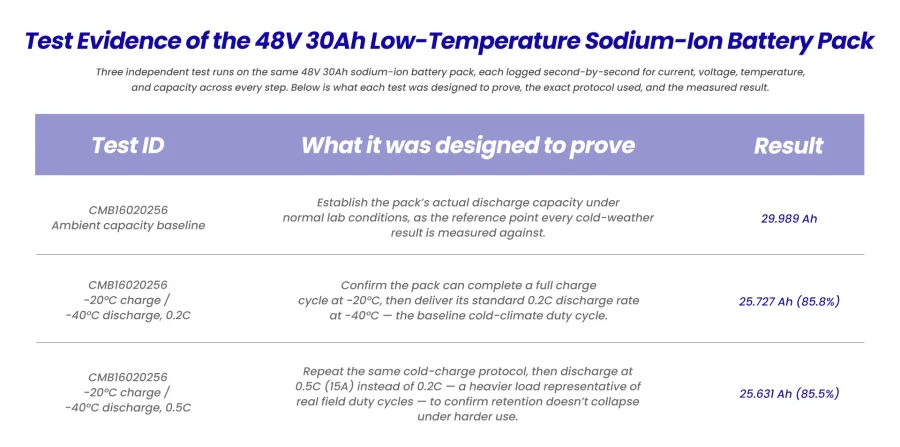
| Test ID | What it was designed to prove | Result |
| CMB16020256 — Ambient capacity baseline | Establish the pack’s actual discharge capacity under normal lab conditions, as the reference point every cold-weather result in this case study is measured against | 29.989 Ah |
| CMB16020256 — -20°C charge / -40°C discharge, 0.2C | Confirm the pack can complete a full charge cycle at -20°C, then deliver its standard 0.2C discharge rate at -40°C — the baseline cold-climate duty cycle | 25.727 Ah (85.8%) |
| CMB16020256 — -20°C charge / -40°C discharge, 0.5C | Repeat the same cold-charge protocol, then discharge at 0.5C (15A) instead of 0.2C — a heavier load representative of real field duty cycles — to confirm retention doesn’t collapse under harder use | 25.631 Ah (85.5%) |
Full test logs, protocols, and second-by-second telemetry for this pack are available on the 48V 30Ah sodium-ion battery pack case study page.
Sodium-Ion vs LiFePO4: What the Industry Claims vs What We Verified
Cold-Weather Claims Vary Wildly Across the Industry
Search “sodium-ion battery cold weather performance” and the headline numbers are all over the map. Some articles cite 90%+ capacity retention at -20°C. Others describe near-instant charging at -30°C with zero preheating. A few go further and report stable operation down to -50°C.
Most of these figures trace back to a manufacturer press release, or a single demonstration vehicle driving 400km through a snowy test track. They’re directionally useful, but rarely published with the actual protocol behind them: what discharge rate was used, what the reference baseline was, or whether the pack was brand new or already cycled hundreds of times.
Our Verification Standard for This Article
We didn’t run those tests. We’re not going to cite someone else’s number as if it were ours, and we’re not going to dispute it either — we simply don’t have the data to do either responsibly. What we can do is draw a hard line between what’s independently measured in this article and what’s industry context. That way, you know exactly which numbers you can trace back to a disclosed protocol.
| Claim | Verification status | Source |
| CMB16020256 retains 85.8% capacity at -40°C, 0.2C discharge, after a -20°C charge cycle | Verified — full bench log published above | CMB Test 02 |
| CMB16020256 retains 85.5% capacity at -40°C under a 0.5C discharge load | Verified — full bench log published above | CMB Test 03 |
| CMB16020256 enclosure passed pressure-based ingress testing | Partially verified — video documentation exists; written pressure/duration data not yet published | CMB internal testing |
| CATL Naxtra cells survive crush, drill, and severing without fire or smoke | Industry-published, third-party — not independently re-tested by CMB | CATL public data |
| Various published figures citing 90%+ retention at -20°C for sodium-ion products generally | Unverified by CMB — sourced from manufacturer marketing materials and single-unit demonstrations without a disclosed test protocol | Public industry reporting |
Why the Test Protocol Matters More Than the Percentage?
The distinction matters more than it looks like it should. A -20°C retention figure and a -40°C figure are not the same claim, and neither transfers directly to a different discharge rate or a pack further into its cycle life. When you’re specifying a battery for equipment that’s hard to service once it’s deployed, the protocol behind the number carries more weight than the number itself — which is exactly why every figure in this article ships with the test conditions attached, not just the percentage.
Safety: Intrinsic Chemistry vs. Verified Environmental Protection
Battery safety in cold-climate outdoor deployments isn’t a single question — it’s two separate ones. The first is chemical: what happens inside the cell under abuse conditions. The second is mechanical: what happens to the pack when it’s sitting in a sealed enclosure through a winter of snow, condensation, and freeze-thaw cycles. Most comparison content only addresses the first. We think the second matters just as much for equipment that has to survive unattended outdoors.
Chemical safety: what the industry has demonstrated
Sodium-ion chemistry is generally described as offering a higher degree of intrinsic safety than many lithium-ion chemistries, because sodium-based cathode and anode materials are less prone to the exothermic reactions that drive thermal runaway. CATL has published abuse-test results for its Naxtra sodium-ion cells showing that fully charged cells subjected to crushing, drilling, and complete severing did not emit smoke, catch fire, or explode — and in the case of the severing test, the cell reportedly continued to discharge normally afterward. (Source: CATL public test data — this is industry-published third-party data, not a CMB in-house test, and is cited here for context on sodium-ion chemistry in general.)
LiFePO4 has its own well-established safety record — its thermal runaway onset temperature is high relative to other lithium chemistries, and it has been extensively validated through crush and nail-penetration testing across the industry over the past decade. The practical difference between the two chemistries isn’t that one is “safe” and the other isn’t; it’s that LiFePO4’s safety record depends heavily on pack-level engineering — thermal management, BMS design, manufacturing consistency — while sodium-ion’s safety margin is built into the chemistry itself before any system-level protection is added.
Environmental sealing: why this matters more than it sounds like it should
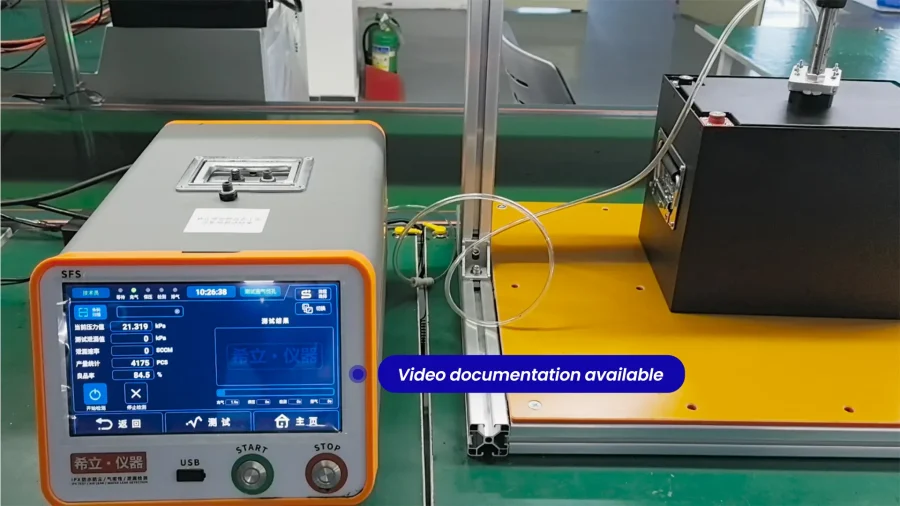
For an IoT device mounted on a pole, buried in a roadside cabinet, or bolted to outdoor equipment in a region that sees snowmelt, condensation, and repeated freeze-thaw cycles, the failure mode that actually takes batteries out of service in the field is rarely thermal runaway — it’s water or moisture finding its way past a seal that looked fine on the bench. A pack can pass every abuse test in a lab and still fail in the field if its enclosure isn’t sealed against the conditions it’s actually deployed in.
CMB has run pressure-based ingress testing on the CMB16020256 battery pack enclosure as part of validating it for outdoor low-temperature deployment.
LiFePO4 vs Sodium-ion Battery Cost and Total Cost of Ownership in 2026
Cell Cost: Sodium-ion Is Not Yet Cheaper
According to the International Renewable Energy Agency, sodium-ion battery costs sat in the $90–125/kWh range going into 2026, while lithium-ion costs (including LiFePO4) ranged from roughly $75–105/kWh. In plain terms: sodium-ion is not yet cheaper than LiFePO4 on a straight cell-cost basis. Anyone telling you sodium-ion is a guaranteed cost win today is working from theoretical production-scale projections, not current market pricing.
Total Cost of Ownership Favors Sodium-ion in Extreme Cold
Where the economics shift is total cost of ownership for a specific use case — unheated outdoor equipment in extreme cold. LiFePO4 battery packs deployed in sub-zero climates typically need supplemental heating elements to charge safely and maintain usable capacity. That adds hardware cost, adds a parasitic energy draw, and adds a component that can itself fail in the field. Equipment built around sodium-ion’s native cold tolerance can skip that heating system entirely.
We haven’t run a full bill-of-materials cost comparison between a heated LiFePO4 system and an equivalent sodium-ion system, so we won’t put a dollar figure on the savings — but the qualitative direction is clear: removing a component removes both its cost and its failure risk.
The realistic takeaway for 2026: choose LiFePO4 for cost efficiency in moderate climates, and evaluate sodium-ion on a total-system basis — not just cell price — for equipment that would otherwise need active heating to survive winter.
Real-World Application: Outdoor Low-Temperature IoT Equipment
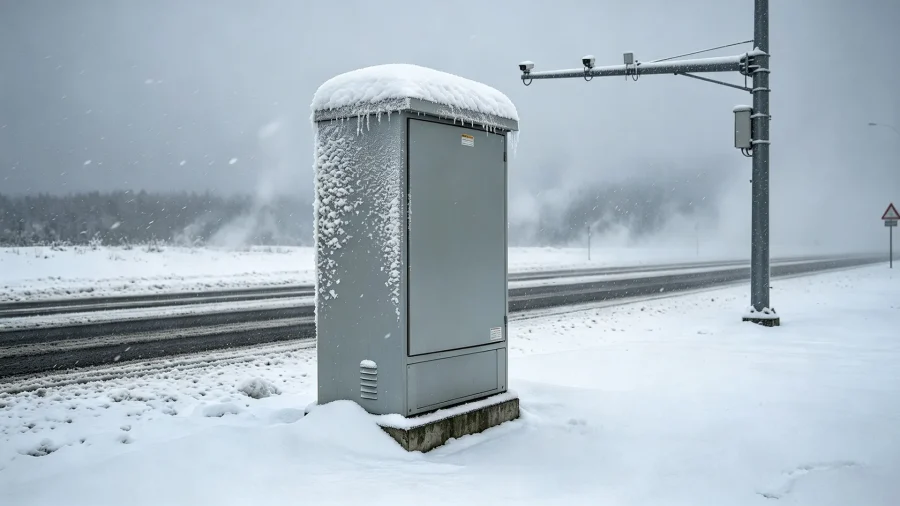
Who This Battery Comparison Is For?
The data in this article speaks most directly to one type of customer: manufacturers of equipment that has to run unattended, outdoors, through winters that regularly drop below -20°C. That includes remote telecom base stations, environmental and weather monitoring stations, cold-chain and logistics tracking devices, agricultural sensor networks, and industrial monitoring equipment deployed across northern regions of China, Northern Europe, and North America.
Why Load-Tested Retention and Sealing Matter Most?
For this customer, the two findings in this article matter more than any spec-sheet energy density number. First, the CMB16020256 pack retains roughly 85-86% of its capacity at -40°C, and that number holds steady even under a discharge load three times heavier than the lightest test condition — which means the pack isn’t just surviving a lab benchmark, it’s holding up under something closer to real duty-cycle behavior. Second, the enclosure has been through pressure-based ingress testing specifically because a sealed pack that fails from moisture ingress is a far more common field failure than one that fails from cell-level abuse.
Matching Pack Size to Your Equipment
The specific pack behind the data in this article is our 48V 30Ah low-temperature sodium-ion battery pack, built for exactly this profile: extreme cold, no active heating, unattended operation. For equipment with higher power draw or longer runtime requirements — larger base stations, multi-sensor arrays, or backup power for unmanned stations — our 48V 105Ah sodium-ion battery pack scales the same cold-tolerant chemistry into a higher-capacity format.
And for smaller, more compact devices — single sensors, portable monitoring units, or space-constrained enclosures — our 12V sodium-ion battery applies the same low-temperature design principles at a smaller footprint. All of these sit under our broader custom sodium-ion battery pack program, where voltage, capacity, and enclosure specs get built around the actual equipment and climate — not a fixed catalog part.
If your equipment fits the profile described in this article, this is the product category worth evaluating first.
Sodium-ion or LiFePO4 — Which Battery Fits Your Application?
Neither chemistry is the universal answer. Here’s how to think about it based on what your equipment actually needs:
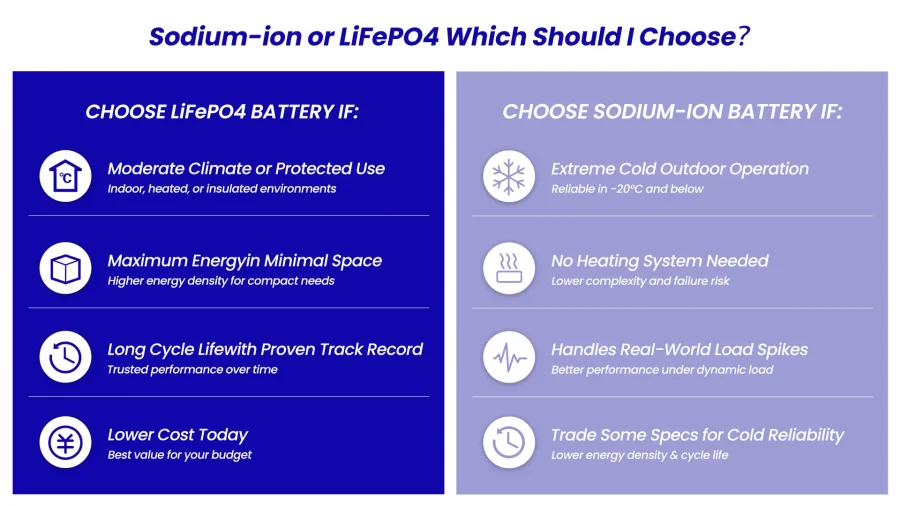
Choose LiFePO4 Battery if:
- Your equipment operates in a moderate climate, or in a heated/insulated enclosure
- You need maximum energy density in the smallest possible footprint
- Long cycle life and proven long-term field data matter more than cold-weather edge cases
- You’re optimizing for lowest cell cost today
Choose sodium-ion Battery if:
- Your equipment runs unattended outdoors in regions that regularly see -20°C or colder
- Adding a heating element isn’t practical or adds unacceptable failure risk
- Your discharge profile includes real-world load spikes, not just steady low-current draw
- You can accept a somewhat shorter cycle life and lower energy density in exchange for cold-weather reliability
For many industrial customers, the honest answer isn’t “replace LiFePO4 with sodium-ion everywhere” — it’s “use sodium-ion specifically for the subset of deployments where cold weather is the dominant failure risk, and keep LiFePO4 for everything else.”
FAQ: Sodium-ion Battery vs LiFePO4
Does sodium-ion battery work below -30°C?
Yes. Testing on a 48V 30Ah production sodium-ion pack showed 85.5-85.8% capacity retention at -40°C, across both light and heavy discharge loads, after charging at -20°C.
How does sodium-ion battery performance change under heavy load in cold weather?
In direct testing, capacity retention dropped by only 0.3 percentage points when the discharge rate tripled from 0.2C to 0.5C at -40°C — indicating the cold-weather performance holds up under realistic field load conditions, not just light bench testing.
Is sodium-ion battery cheaper than LiFePO4 in 2026?
Not on a per-kWh cell cost basis. IRENA data places sodium-ion at $90-125/kWh versus $75-105/kWh for lithium-ion in 2026. Sodium-ion’s cost advantage, where it exists, comes from eliminating system-level components like heating elements in extreme-cold deployments, not from lower cell prices.
What is the cycle life of sodium-ion vs LiFePO4?
LiFePO4 typically delivers 3,000-6,000+ cycles, while current commercial sodium-ion cells generally range from 1,500-3,000 cycles, though newer formulations claim higher figures.
Is sodium-ion battery safe for outdoor IoT equipment?
Sodium-ion chemistry offers strong intrinsic thermal safety, based on published third-party abuse testing. For outdoor equipment specifically, environmental sealing against moisture ingress matters just as much as cell-level abuse resistance — a factor that depends on pack and enclosure engineering rather than chemistry alone.
Sodium-ion battery vs LiFePO4 ultimately comes down to your equipment’s operating temperature. For unattended equipment in regions that regularly drop below -20°C, sodium-ion’s verified -40°C capacity retention makes it the more dependable option.
For equipment in moderate climates, LiFePO4 vs sodium-ion battery comparisons still favor LiFePO4 on energy density, cycle life, and cost. Both chemistries have a place in a 2026 industrial battery strategy — the right choice depends on where your equipment actually operates, not on which technology gets more headlines.